The Church Of England's Collapse Is Happening In Plain Sight
 By PNW Staff September 21, 2026
Share this article:
Imagine trying to write a parody of the modern Church of England.
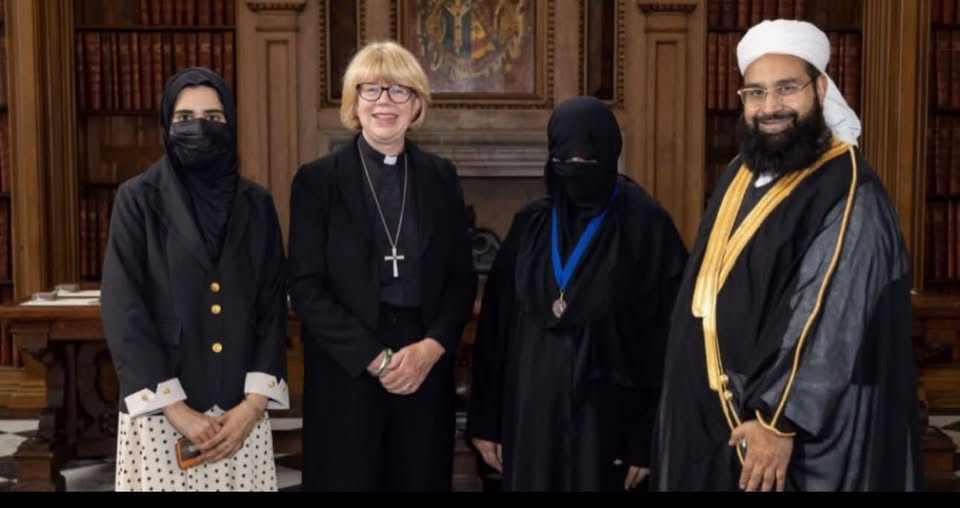
Britain's most senior Christian leader presents an award for “reconciliation and interfaith cooperation” to a Muslim cleric who once proposed honoring Osama bin Laden with the title “Sword of God.”
Then imagine scheduling the presentation for September 11.
Not just any September 11, either. The 25th anniversary of the terrorist attacks that killed nearly 3,000 people in the United States.
Unfortunately, this isn't parody.
Archbishop of Canterbury Sarah Mullally presented Hafiz Muhammad Tahir Mehmood Ashrafi, chairman of the Pakistan Ulema Council, with the Hubert Walter Award for Reconciliation and Interfaith Cooperation on September 11. The award recognized what was described as his “outstanding work as an ambassador of interfaith harmony in Pakistan.”
Days later, Lambeth Palace withdrew it.
The reason? According to the Archbishop's office, “previous comments” made by Ashrafi had “come to light.”
That explanation may be almost as disturbing as the original decision.
The Award That Should Never Have Been Given
The comments weren't some obscure social-media post from Ashrafi's youth.
In 2007, while leading the Pakistan Ulema Council, Ashrafi said he would give Osama bin Laden the title “Saifullah” — “Sword of God” — amid controversy over Britain's knighthood of Salman Rushdie. Ashrafi has since insisted that the remarks have been stripped of their context and were intended to illustrate Muslim anger over the Rushdie honor, not to endorse bin Laden.
People can consider that explanation for themselves.
But the question facing the Church of England is different: How did nobody responsible for vetting the recipient discover something this explosive before the Archbishop of Canterbury personally placed an award in his hands?
And how did nobody recognize the extraordinary symbolism of doing it on September 11?
The withdrawal doesn't erase the problem. It exposes it.
This was not an award hastily handed out by a local parish. It came from the office of the Archbishop of Canterbury and specifically honored its recipient for reconciliation and interfaith cooperation.
The institution that awarded it apparently learned enough afterward to decide that it should never have been given.
That should deeply concern anyone wondering about the judgment of those now leading one of Christianity's most historically important institutions.
And Then Came Leeds
As if the Church of England needed another controversy involving Hamas and radical Islam, another erupted almost simultaneously.
Leeds Minster had been hosting an exhibition called “Stitch Their Names Together,” displaying the names of thousands of Palestinians reported killed in Gaza since October 2023.
Before the exhibition opened, the Leeds Jewish Representative Council warned that names of Hamas fighters could be included. Minster officials checked 12 names that had initially been identified, found that those particular names weren't displayed on the panels at Leeds, and allowed the exhibition to proceed.
Then came more evidence.
On September 18, Leeds Minster acknowledged receiving information indicating that at least 18 known Hamas fighters were in fact named in the exhibition.
The church immediately closed it and apologized for damaging its relationship with the Jewish community.
Again, the response came after the problem had already occurred.
Again, outsiders sounded the alarm.
Again, a Church of England institution found itself scrambling to undo the damage.
How many times can this happen before Christians start asking whether the problem goes deeper than inadequate vetting?
[Advertisement]
When Reconciliation Loses Discernment
Christians should love their Muslim neighbors and desire peace with them.
None of that requires abandoning discernment.
Interfaith dialogue does not require handing out awards.
Compassion for Palestinian civilians does not require blurring the distinction between civilians and Hamas terrorists.
Reconciliation does not require pretending profound theological and moral differences don't exist.
And Christian love certainly doesn't require naivety about radical Islamist ideology.
Yet this increasingly seems to be the trap into which parts of Western Christianity have fallen. Being welcoming becomes more important than being discerning. Avoiding offense becomes more important than confronting uncomfortable truths. The desire to demonstrate tolerance becomes so powerful that institutions sometimes fail to ask the most obvious questions until someone outside the church forces them to.
The irony is difficult to miss.
The Church of England is extraordinarily careful about language, inclusion and sensitivity in many areas of modern life. Yet somehow an award could still reach the hands of a cleric with a highly controversial public record — on the anniversary of 9/11.
A Church Already In Crisis
All of this comes at an especially dangerous moment for the Church of England.
Sarah Mullally inherited an institution already battered by scandal, theological division and declining attendance. Her predecessor, Justin Welby, resigned following devastating criticism over the Church's handling of the John Smyth abuse scandal.
The Church desperately needs to rebuild trust.
Instead, within the opening chapter of a new archbishop's tenure, Lambeth Palace has found itself explaining how an interfaith award presented by Mullally had to be withdrawn after information about its recipient “came to light.”
Christians have every right to ask how such a failure occurred.
Who vetted the recipient?
What was examined?
What wasn't?
And why did the warning signs apparently become important only after the public began asking questions?
Those aren't unreasonable questions. They are precisely the questions an institution serious about restoring trust should want answered.
The Real Crisis Isn't Islam
But there is an even larger lesson here.
The fundamental problem facing the Church of England isn't that Muslims believe Islamic doctrines.
The deeper crisis is that a Christian institution increasingly appears unsure how confidently it should advocate for its own.
A confident church can love Muslims without pretending Christianity and Islam are interchangeable paths to God.
A confident church can pursue reconciliation while still exercising judgment about whom it honors.
A confident church can grieve for Palestinian children while refusing to inadvertently commemorate Hamas terrorists.
A confident church understands that tolerance does not mean theological surrender and that compassion does not require moral confusion.
Most importantly, a confident church remembers what it exists to do.
Jesus did not commission His followers to make Christianity acceptable to every competing worldview. He told them to “make disciples of all nations.”
The Church's mission isn't to convince the world that Christians are sufficiently fashionable, progressive or accommodating.
It is to proclaim Jesus Christ.
Perhaps that is why these controversies resonate beyond the individual mistakes involved. Christians are watching an ancient institution struggle with something much deeper than public relations.
They are watching a crisis of identity.
The Church of England doesn't need another carefully worded apology after the next controversy. It doesn't need another committee explaining how something embarrassing slipped through the cracks.
It needs something much more radical.
It needs the confidence to be Christian again.