When "Respect" Means Silence: Why Christians Should Watch Britain’s New Orders
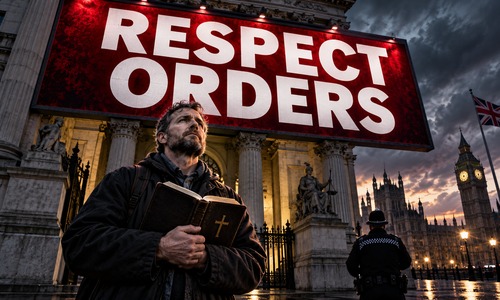 By PNW Staff October 27, 2026
Share this article:

A pastor preaches John 3:16 in public—and ends up convicted in court.
The gospel offers hope, but it also confronts us with hard truths: we are sinners in need of repentance, forgiveness and a changed life. That message can offend. But being challenged to turn from sin is not the same as being threatened or harassed.
In Northern Ireland, retired pastor Clive Johnston was convicted under a law governing abortion “safe access zones” after holding an open-air service that included that Bible verse. He is appealing. His case involved a different law from Britain’s new Respect Orders, but it raises a question Christians should take seriously: can peaceful religious expression become punishable when someone in authority decides it has crossed a line?
Respect Orders have now taken effect in England and Wales. They are promoted as a way to curb persistent antisocial behavior. A court can restrict where an adult goes or what they do, and can require them to take part in activities aimed at addressing the causes of their behavior. Breaching an order is a criminal offense that can lead to prison.
The government points to conduct such as harassment, intimidation and street disorder. Christians should want genuine threats and harassment dealt with. But the legal test also turns on whether conduct causes—or is likely to cause—“harassment, alarm or distress.” That language invites a difficult question: what happens when peaceful Christian speech itself is described as harmful?
When the message offends
Christian teaching often challenges the assumptions of the day. A pastor may preach that marriage is between a man and a woman, that human beings are male or female, that abortion is wrong, or that government immigration policy is failing. Those beliefs can provoke strong reactions. A complaint can turn theological disagreement into an allegation about the effect of someone’s words or conduct.
Respect Orders do not declare Christian beliefs illegal, and they were not used in Johnston’s case. But the power to impose restrictions and mandatory requirements deserves scrutiny precisely because it operates at the boundary between behavior that harms others and speech that people find offensive.
This concern is not theoretical. Bristol preacher Dia Moodley was arrested after making comments about Islam and transgender ideology while street preaching. Police later ended the investigation without taking further action. The arrest itself meant hours in custody and months under investigation. Whatever one thinks of his words, Christians should ask whether public preaching is becoming something people must do at the risk of police intervention.
The cost of staying silent
The chilling effect does not require a conviction. A police visit, arrest, legal bill or months-long investigation can be enough to make a pastor, parent or church leader reconsider speaking publicly. If a court order then tells someone where they may go or requires them to attend a program, the consequences reach beyond the original complaint. And if they breach that order, prison becomes possible.
That is why Christians should care even if they never expect to receive an order themselves. The freedom to preach the gospel includes the freedom to say things others reject. It includes peaceful opposition to abortion, public defense of biblical marriage, and the right to challenge ideas about sex and gender. These freedoms mean little if people can exercise them only when no one is offended.
A free society must distinguish threats and targeted harassment from peaceful religious witness. The terms of these orders must be applied narrowly, with strong protection for lawful speech and a real chance to challenge restrictions before they upend someone’s life.
“Respect” should not mean silence before the prevailing culture. Christians should watch these laws closely—not because every complaint will become an order, but because the power to restrict a person’s conduct carries serious consequences when the line is drawn too broadly.