
Ring’s Flying Camera Brings Surveillance Deeper Into The Home
 By PNW Staff November 11, 2026
Share this article:
You may never buy a flying security camera. But the idea behind Amazon’s new Ring Drone Cam affects far more than its future customers: security technology is moving from watching a space to acting inside it.
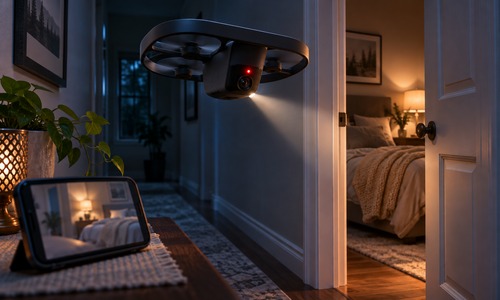
A motion sensor trips in the middle of the night. A small drone lifts from its dock and flies toward a saved patrol point. Its lights cut through the darkness as it checks the area.
Ring’s $249.99 Drone Cam can fly preset routes, respond to alerts from connected devices and be sent out on demand. Ring says its system maps the home and uses cameras, sensors and cloud processing to navigate. Scheduled patrols require a compatible subscription.
The camera used to stay where someone mounted it. Now it can go where the system sends it.
When A Camera Moves, The Rules Change
A fixed camera watches what passes in front of it. A mobile camera changes who controls the view, where it goes and when recording begins. When an alarm or sensor triggers the drone, it can move before anyone in the home has checked what happened.
The system doesn’t need to decide that a crime is taking place. It only needs an alert to set the drone in motion. A false alarm can still send a camera toward a bedroom or down a hallway. That raises a practical question: who is responsible when a machine reacts to the wrong signal, and who gets to decide whether it should enter a particular room?
Ring says the drone’s camera is off while docked and a light indicates when it is recording. Those details matter, but they don’t answer the question of consent. The person who buys the device makes the choice. Children, guests, relatives, babysitters and repair workers may have to live with it.
A home’s layout becomes part of the security system too. Ring says the drone maps its surroundings so it can navigate. That may help it avoid obstacles, but it also means the technology depends on information about the private spaces where people live. Consumers should ask what is mapped, how it is handled and how much trust they are expected to place in the company operating the system.
Surveillance Can Follow You To Work
Ring’s Rover Cam brings the same idea into offices and warehouses, where a camera on wheels can patrol and investigate alerts. Workers may have little say in whether a mobile device monitors their workplace. For many people, the first encounter with robotic surveillance may be on the job, not at home.
That matters because technology changes expectations. Once moving cameras become routine in workplaces and homes, people may be asked to accept them in more places as the ordinary price of security.
The Price Doesn’t End At Checkout
The drone is advertised at $249.99, but some features require a continuing Ring subscription. Security is becoming a service people pay for month after month, with each new capability offered as another reason to stay enrolled.
That business model can turn anxiety into a steady source of revenue. The more threats people fear, the more monitoring companies can sell. The next device promises to see more, move faster or cover another part of the home.
Security matters. But it should not make constant surveillance feel unavoidable. A home should be a refuge, not a space every room must surrender to automated patrols.