
Should We Scrap The Iran Deal?
 By David Harris/Algemeiner.com October 13, 2017
Share this article:

This week, President Donald Trump is expected to speak about Iran -- specifically, the fate of the Iran deal (JCPOA).
The American Jewish Committee (AJC) has been following Iran policy discussion closely for years, and we are in touch with a wide range of decision-makers from the US and overseas.
From the start, the AJC took a deliberative approach to the JCPOA, just as we will do depending on what the president says regarding certification/decertification of the deal, and the role of Congress going forward.
After the announcement of the agreement, on July 14, 2015, we dedicated 23 days to reviewing it thoroughly, meeting privately with a number of world leaders, including Secretary of State John Kerry, in the process.
In the end, we opposed the deal, believing that it fell short on several key fronts, among them:
The shift in negotiating strategy from "dismantle (the nuclear program) in order to dismantle (the international sanctions)" to "delay (the nuclear program) in order to dismantle (the sanctions)";
The provision of a sunset clause, which paves the way for Iran to become a nuclear-threshold nation down the road;
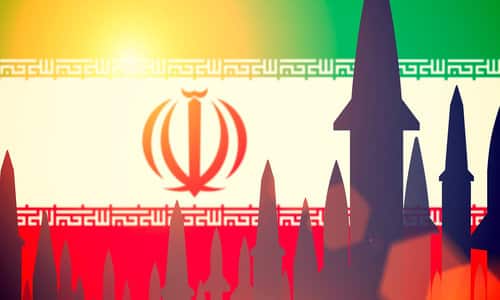
The failure to address Iran's ballistic missile program;
The omission of military sites from those facilities subject to inspection; and
The absence of any reference to Iran's support for terrorism and regional destabilization.
At the same time, we said that we would be happy to be proved wrong -- and that any verdict would obviously take time. Needless to say, if the JCPOA fulfilled all the claims made about it by its supporters -- including, centrally, cutting off Iran's path to a nuclear weapon forever -- then we would readily acknowledge our error in judgment.
But in the past two years, despite the Obama administration's belief, that the accord would "moderate" Iranian behavior and strengthen the "moderates in the regime," the inescapable reality is that, as we predicted, the opposite has happened.
Tehran has only become more emboldened and belligerent in the region, as well as more hostile towards the United States and Israel.
Iran, entrenched in Syria, is a key partner of President Bashar al-Assad in the mass atrocities that have been perpetrated in the war-torn land. Iran has built weapons factories in Syria and placed troops there.
It is also active in Iraq and Yemen. It is an important factor in Lebanon, via its proxy, the terrorist group Hezbollah. It funds Hamas, another terrorist group, whose oft-repeated goal is Israel's elimination. And it continues to test and deploy potent new weapons systems.
In other words, Iran has materially strengthened its hegemonic ambitions and created a new balance of power in the Middle East.
It also continues to maintain ties with North Korea, and there is a widespread presumption -- as we have discussed in various Asian capitals -- that Iran and North Korea are actively cooperating in nuclear research and ICBM development.
Moreover, in early 2015, we were told by US officials, in the lead-up to the deal, that Iran's unfrozen assets would be largely devoted to domestic priorities, and not to the defense sector or military activities abroad.
The argument made to us was that in order to prevent further civil unrest, as occurred in June 2009, Iran's leaders would essentially "buy" public support by funding neglected infrastructure projects, from roads to schools, and sewers to hospitals. That has not proven to be the case.
We were even told that Iranian President Hassan Rouhani could well be the next Mikhail Gorbachev, ushering in a veritable revolution in policy and mindset. That, too, has not proven to be the case.
Clearly, something more must be done to address the Iranian issue, and it would best be accomplished in concert with our partners in the international community.
But how the Trump administration will effectively chart such a course in its upcoming -- and much-anticipated -- statement, and whether our European allies will be ready to revisit a matter that they thought they had settled in 2015 (and potentially jeopardize the subsequent trade deals with Iran that they have been actively pursuing) remains to be seen.
There are at least two fundamental obstacles:
First, it appears for now that Washington is largely divided along partisan lines when it comes to revisiting the JCPOA, with Republicans supporting the move and Democrats opposing it. Can a viable way be found around this all-too-familiar -- and paralyzing -- face-off?
Will Democrats look past the desire to protect this signature initiative of the Obama era and acknowledge that there are serious flaws in the agreement that cannot be ignored, except at our collective peril?
Will Republicans look beyond their antipathy for the Obama presidency -- and this deal in particular -- and grasp the fact that any precipitous action could end up isolating the United States, not Iran, and raise questions about American credibility?
And second, the Trump stock is not very high in European and other capitals these days. That being the case, will any new moves by Washington be seen as nothing more than saber-rattling and brinkmanship, without a convincing and constructive plan behind it?
Iran poses an immensely complex and thorny set of policy options. No one person or party has all the answers, as history has amply shown. Only maximum collaboration in Washington and among our allies is likely to produce workable answers.
Regrettably, however, the chances for reaching that goal don't look very promising at the moment.
Originally published at Algemeiner.com - reposted with permission.