Iran: Mounting Persecution Of Christians
 By Majid Rafizadeh/Gatestone Institute February 26, 2019
Share this article:
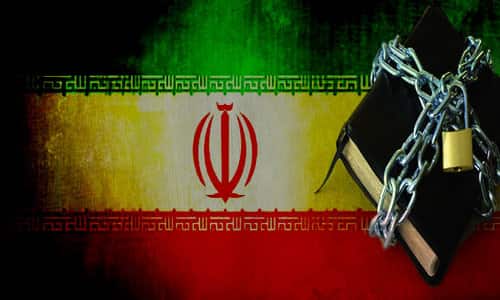
The persecution of Christians in Iran in 2018 increased to a new level, according to an in-depth report jointly released by Open Doors, Middle East Concern, Article 18, and Christian Solidarity Worldwide.
"The end of 2018 saw an unprecedented wave of raids on private house gatherings, leading to a large number of arrests. Many Christians received prison sentences, or had sentences upheld by the Court of Appeal," noted the report.
Despite this roaring abuse, and violations and attacks against Christians being significantly ratcheted up, the international community continues to label the Iranian government, run by President Hassan Rouhani, as "moderate.
What is puzzling is that while the Iranian authorities boast that Christians and other religious minorities are treated fairly under Islam, the Iranian regime is, in fact, increasingly targeting Christians solely for daring peacefully to practice their faith.
Even though these actions are frequently documented, their claims do not match up with the ever-increasing numbers of arrests and punishments suffered by those practicing a religion other than Islam. For example, in a single recent week, more than 100 Christians were arrested.
There was also an unprecedented "surge during November and December 2018 as arrests were reported in the cities of Ahvaz, Chalus, Damavand, Hamedan, Hashtgerd, Karaj, Mashhad, Rasht, Shahinshahr and Tehran. In one week alone, one hundred and fourteen Christians were reported to have been arrested."
Two of the Islamic Republic's state organs seem to responsible for initiating these violations against Christians. The Ministry of Intelligence and its affiliated agents carry out sophisticated surveillance of the Christian communities, and their actions are documented and recorded throughout their daily lives. The information is then passed to the Islamic Revolutionary Guard Corps (IRGC), a security service that has morphed into a terror group. As the Guardian reports:
"Mohsen Sazegara was a founding member of Khomeni's sepah [IRGC], but is now an exiled dissident and an outspoken critic of the organisation he helped establish. 'We created a people's army to defend the country and also help in emergencies, but it turned into a monster.'"
Acting on the information they receive, the Revolutionary Guards unleash raids throughout the Christian community, and make sweeping arrests of the citizens. The abuse does not stop with surveillance and arrest; these innocent citizens are then denied fair and due process or access to their own counsel. To solicit a confession, the interrogators resort to violence and, according to Open Doors, solitary confinement and an assortment of physical and psychological torture techniques:
"Prisoners are often tortured physically and mentally. They are subjected to near-daily interrogations, including prolonged beatings, and forced to endure twisted acts of persecution. While he was in prison, church teacher and ex-prisoner Morad recounted how the guards would bring him tea but not allow him to go to the bathroom. Ex-prisoners report sleep deprivation and threats of harm to family members -- as well as pressure to recant their faith."
The IRGC does not limit itself to individuals. It has repeatedly raided entire churches, shut them down, or confiscated the Christians' properties. As a result of this runaway torment, an increasing number of Christians have resorted to practicing their faith privately in their homes, a practice known as hosting "house churches". Even being in their own homes provides no safety: the IRCG continue to increase their crackdown on any Christian religious practice.
--------
La Ley de Juegos Electrónicos de Colombia legalizó oficialmente casi todas las formas de juego en línea para incluir juegos de casino, apuestas deportivas Colombia, póker, intercambios de apuestas y muchos más.
--------
The regime's authorities then usually create trumped up charges against Christians such as, "endangering the national security" of the country. Shamiram Issavi Khabizeh, the wife of Rev. Victor Bet Tamraz, for instance, was sentenced to five years' imprisonment for "membership in a group with the purpose of disrupting national security."
The Sharia court also added another five years in prison to her sentence for "gathering and colluding to commit crimes against national security." Their only evidence for this charge was that she was caught practicing her religion. How can reading a gospel in one's private home be such a grave threat to the national security of the country?
One objective of these kind of violations against Christians by Iran's Islamic forces seems to be to threaten and intimidate the entire Christian community, whose ancestors have lived in this country for thousands of years, to flee in fear of imprisonment, torture and death.
The Revolutionary Guards strategy seems to be to continue to apply pressure on the Christian community to decrease the number of Christians living in Iran, allowing the proportion of Muslims to increase, thereby affording the majority an even greater level of control.
Another objective seems to be driving the practice of Christianity into the shadows. Their mistreatment not only keeps Christians on edge and terrified; it also prevents them from spreading their gospel in a public manner and adding others to their faith. The Iranian government views Christians who stay in the country as outsiders, so it treats them as such.
Under international law, the Iranian government has an obligation to respect freedom of religion. Yet, while the rights of Christians are being violated in Iran at an unprecedented level, how long will the international community remain silent?
What will it take for these endlessly preening moralists to act against those human rights violations so that one day people will not have to hide their gospel, or live their daily lives in fear of severe persecution?
If the Iranian government refuses to take steps to protect the rights and freedom of the Christians, these innocent people can only plead for humanitarian aid from the community outside their borders, in the hope that one day they might live in a land where their beliefs and prayers are not a reason for imprisonment and torture.
Originally published at Gatestone Institute - reposted with permission.