
The Election That Decided The Future Of The Middle East Conflict
 By Jonathan Tobin/JNS.org September 17, 2019
Share this article:
On the eve of the second Israeli election of 2019, there is no shortage of apocalyptic rhetoric about the potential consequences of Prime Minister Benjamin Netanyahu's re-election.
From The New York Times editorial column to the Forward's opinion pages, we're once again hearing the same stale rhetoric about how another Likud-led government will mark the decline and fall of Israeli democracy, the end of the Israel-Diaspora relationship, torpedo U.S. support for the Jewish state and cause the final collapse of any hope for peace with the Palestinians.
That last point of view was best articulated by Washington Post editorial-page editor Jackson Diehl, who, like many liberal pundits, believes that Netanyahu's promise to apply Israeli law to West Bank settlements and to hold onto the Jordan Valley forever ensures that peace will never be possible with the Palestinians.
Let's leave aside the likelihood that Netanyahu statements are just campaign rhetoric that won't be turned into action. Israeli law already applies to the settlements, and annexation, even of the Area C territory where Jewish communities are located, is still unlikely.
As for the Jordan Valley, Netanyahu's chief rival--the Blue and White Party's Benny Gantz--has said that his position on the issue is no different than that of the prime minister. What most Americans--Jewish and non-Jewish alike--still fail to understand is the broad consensus among Israelis on security issues and the peace process.
That consensus holds that the Palestinians have no real interest in peace, and that in the absence of a peace partner, the kind of territorial concessions Israel's liberal friends demand it make wouldn't be so much unwise as insane.
That's why all the talk about Israel's latest election deciding the future of the peace process isn't just wrong, but ignores the fact that this question was actually determined in an election held 14 years ago, as well as in one that didn't happen four years later.
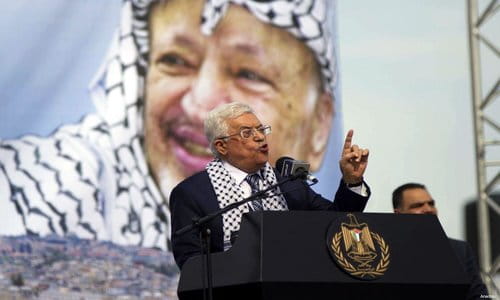
By that I refer to the vote that took place on Jan. 9, 2005 when Mahmoud Abbas was elected president of the Palestinian Authority, succeeding Yasser Arafat. Abbas, who was the leader of Arafat's Fatah Party and the chairman of the Palestine Liberation Organization, won with 62 percent of the vote.
That wasn't very impressive when you consider that his Hamas rivals refused to run in an election they not unreasonably believed was fixed, and that, according to independent Palestinian researchers, 94 percent of the coverage of the election in the Palestinian media was devoted to laudatory coverage of Abbas.
The election was largely the result of American pressure on both the Palestinians and the Israeli government then led by Ariel Sharon. President George W. Bush and his foreign-policy team had become convinced that the establishment of Palestinian democracy was the necessary prerequisite to peace.
Like the Bush administration's similarly misguided attempt to convert an Iraq that had been liberated from the rule of Saddam Hussein into a democracy, the notion that Palestinian political culture was capable of sustaining political liberty, let alone choosing peace, was a fantasy.
Bush had rightly rejected Arafat--who had been foolishly embraced by President Bill Clinton and Israeli governments led by the Labor Party as a peacemaker--as an unreconstructed terrorist. But although Abbas wore a suit rather than Arafat's combat fatigues, he was no more interested or capable of ending the conflict with Israel than his predecessor.
While his elevation to the post of president of the P.A. was heralded at the time as a step towards peace, all it really did was to further entrench the corrupt rule of Fatah. Though Hamas branded him as a weakling, Abbas had no intention of making peace. The Islamist terror group won a Palestinian legislative election in 2006 and then organized a blood coup in 2007 that enabled them to seize power in Gaza.
So it was little surprise that when it came time for another Palestinian election, Abbas merely stayed in office without holding another vote. As had been the case many times elsewhere in the Third World in the post-colonial era, Palestinian democracy was a case of one man, one vote, one time.
There has never been another election for Palestinian president in either the West Bank or Hamas-controlled Gaza; Abbas is currently serving in the 15th year of the four-year term to which he had been elected.
Had the Palestinians elected a person willing or capable of making peace, they would have grabbed Ehud Olmert's 2008 offer of an independent Palestinian state in Gaza and almost all of the West Bank, as well a share of Jerusalem. Instead, as Arafat did in 2000 and 2001, Abbas said "no."
He continued to say no when the Obama administration revived negotiations and Netanyahu expressed a willingness to talk about the future of the West Bank. And he continues, to this day, to refuse to recognize the legitimacy of a Jewish state, no matter where its borders are drawn. That means that he won't signal that the century-long Palestinian war on Zionism was a failure and finally over.
It was the Palestinian elections of 2005 and 2006, as well as the one that wasn't held in 2009, which made it clear that peace with Israel was impossible until a sea change in their culture produced a leadership that would be serious about peace. Should such a leadership ever emerge, they will, no doubt, find willing Israeli partners.
But that's something to wish for in the future. For now, Israelis understand that the Palestinians have already decided against peace--no matter what Netanyahu, Gantz or any other potential prime minister will or won't do.
And it is high time that Americans who claim to be experts about the Middle East reconciled themselves to this reality, rather than continue to spin fantasies about peace the Palestinians have already rejected.
Originally published at JNS.org - reposted with permission.





