
Understanding Iran's Apocalyptic Shi'ite Dream
 By Lawrence Franklin/JNS.org August 14, 2024
Share this article:
It might be news to the United States and Israel that despite the Satanic appellations assigned to them by Iran's regime--"Big and Little Satan" respectively--neither figure is the Islamic Republic's final objective, which defines Shi'ite Islam. Iran's theocratic worldview is shaped by the Shi'ite belief that Muhammad's will was betrayed by the Sunni Caliphs who immediately succeeded the prophet. The true believers in the Shi'ite hierarchy assert that the Sunni hijacking of Islam will end with the return of the Imam Zaman (the Twelfth Imam), ushering in the end times.
For certain, the Islamic Republic employs the "Zionist Entity" as a foil to obscure its apostate image among Sunnis. Iran's militancy also diminishes Saudi Arabia's traditional primacy as guardian of Sunni Islam's global interests. Iranian efforts to recruit both Shi'ite and Sunni Muslims to join the anti-Zionist "resistance" have succeeded in capturing the passion of even some Sunni extremist groups, like Hamas.
Although Iran's revolution is a modern occurrence (1979), the essence of its theological ideology is rooted in the first decades of Islamic history. The Sunni-Shi'ite divide is traceable to the refusal by Damascus-based Umayyad dynastic Islamic notables to recognize the claim of Ali, the son-in-law and nephew of Muhammad, as the prophet's legitimate successor as leader of Islam. Though Ali ultimately was named the Fourth Caliph, Sunni leaders disinherited his sons, killing his youngest, Hussain, and many of his followers at the Battle of Karbala, Iraq in 680 CE.
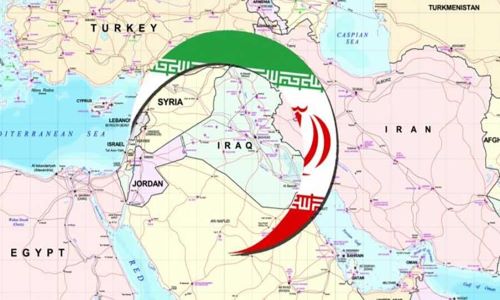
Following the defeat of their Shi'ite rivals, Sunni Muslims dominated the "Islamic world" in both power and population for centuries, except for a few periods of regional Shi'ite ascendancies. All that changed with the U.S.-led destruction of the Sunni dictatorship of Saddam Hussein. The demise of Saddam liberated Iraq's Shi'ite majority, many of whom felt an affinity for Shi'ite Iran across the border. It is these Shi'ites who make up the several terrorist gangs in Iraq who do the bidding of Iran's extremist regime.
Iran's theocratic ideologues also share old-school ties with Iraq's leading clerics, many of whom were trained in the same Shi'ite seminaries in Najaf (Iraq) and Qom (Iran). The overriding goal of Iran's Shi'ite clerics is finally to replace Sunni dominance; first in the Middle East and eventually throughout the Islamic world. Iranian muscle in the Persian Gulf has now outclassed the Arabian Peninsula's monarchial Sunni states in raw power. While these peninsular kingdoms remain wealthy, their thrones rest on sand. For the foreseeable future, they will all require protective guarantees from the calvaries of heathen states like America, Israel or China.
Iran has appealed to Shi'ite minorities around the world, including in South Asia, West Africa and Mainland as well as Archipelago Southeast Asia. Iran has embraced Syria's Alawite rulers as legitimate fellow Shi'ites. It has recruited Shi'ite soldiers from Afghanistan and Pakistan to join the ranks of the Lebanese Shi'ite terror group Hezbollah and Yemen's ethnic Houthi Shi'ites who serve in the pro-Iranian international brigades fighting Tehran's wars in the Mideast.
To deal the killing blow to Sunni political and religious Islam in the Gulf, Iran must "persuade" the U.S. to jettison its view that Middle East stability is a vital American national interest. Such a calculation by U.S. national security experts would, by definition, force Washington to reevaluate America's longstanding commitment to Israel's defense.
Iran's efforts to create anti-Israel sentiment among segments of the U.S. population are precisely orchestrated to attrit traditional popular support for Israel among American citizens. The mobilization of Muslim-American sentiment for the "Palestinian cause," together with idealistic and naïve support among some college students, has already influenced the 2024 U.S. presidential election to a greater degree than ever envisioned by Russia or China. Vice President Kamala Harris's decision not to select the popular Jewish-American Democratic Governor of Pennsylvania Josh Shapiro as her running mate buttresses the accusation that she has bowed to the anti-Israel faction of her party, which includes open antisemites in its ranks.
Iran's future strategy to undermine the American presence in the Middle East may include several confrontational tactics: Tehran could seek to enflame the Shi'ite-majority population of Saudi Arabia's Eastern Province. This region is the site of much of the kingdom's oil wealth and has traditionally been a center of deep opposition to the ruling al-Saud dynasty, the global standard bearer of Sunni Islam.
Another disruptive option is already in play: Iran's propagandists are presently stoking existing anti-Israeli animosities among Palestinian Arabs living in Judea and Samaria. Iran hopes these Palestinians will violently resist Israel's administrative control to create another front on Israel's borders.
Tehran's radicalization of this population may also be used to attempt to topple the already teetering Hashemite dynasty in Jordan. Indeed, King Abdullah II might be the last King of Jordan, as his country's Palestinian Arab population continues to grow. The overthrow of the Hashemites would remove a pro-Western ally that Iran could use as another tentacle in its anti-Israel strategy.
Furthermore, Iran has a subterranean network of cooperative elements in the Kingdom of Bahrain. This Sunni-ruled island state hosts the headquarters of the U.S. Navy's Fifth Fleet and is a pro-Western ally in the Mideast. The dissolution of al-Khalifa dynastic rule in Bahrain would probably lead to the ouster of the Fifth Fleet, complicating the West's ability to police Iranian aggression in the Persian Gulf.
Bahrain is vulnerable to the Islamic Republic's malevolent designs because its Sunni dynasty rules over a restive, much larger Shi'ite population. The al-Khalifa Dynasty is unpopular but maintains control through a predominantly South Asian thuggish paramilitary of mercenaries. As an emergency security backup, a 15-mile bridge and causeway complex, built, in part, for a quick suppressive response, connects Bahrain to Saudi Arabia.
The U.S. and Israel must never underestimate Iran's willingness to act on its ideologically inspired, apocalyptic dream that the Shi'ite narrative will be the universally accepted true legacy of Islam. The diminution of democratic power in the region will only lead to bolder moves by Iran's clerics and their military class of zealots in the Islamic Revolutionary Guard Corps (IRGC). Hence, now or later, the Islamic Republic must be defeated, whether they develop nuclear weapons or not.
Originally published at JNS.org