
China Sending A Warning? Hackers Could Bring Down U.S. Infrastructure 'At Will'
 By Dan Hart/Washington Stand January 09, 2025
Share this article:

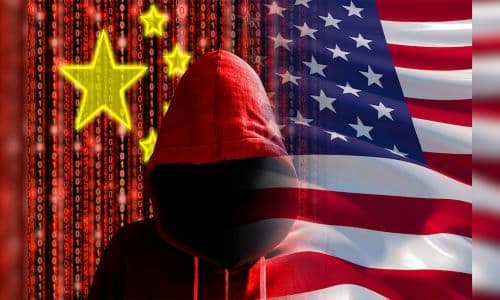
In the wake of an unprecedented breach of U.S. Treasury Department workstations by Chinese state-sponsored hackers last week, a new report has revealed that the Biden administration quietly acknowledged over a year ago that hackers sponsored by the communist regime have the ability to shut down U.S. infrastructure such as ports and power grids "at will."
A Wall Street Journal report published over the weekend cited individuals familiar with a "secret meeting" Biden's National Security Adviser Jake Sullivan held with telecommunications and technology executives at the White House in the fall of 2023, in which Sullivan admitted that Chinese hackers had acquired the ability to potentially paralyze the U.S. by disrupting power grids and shipping ports.
A year after the meeting, hackers from China executed a further massive breach of U.S. internet service providers in September 2024, demonstrating the extent of their capabilities to potentially bring America to a standstill.
The revelations come following an additional "major incident" that occurred in December in which workstations at the U.S. Treasury Department were remotely accessed by China state-sponsored actors after a stolen keycode was used to override security software.
"They got into three units of the Treasury," explained author and China expert Gordon Chang, during Saturday's edition of "This Week on the Hill." "One was Secretary Yellen's office. The other was the Office of Foreign Assets Control. Those are the people who manage sanctions. And that's probably what they were really looking at to see what the United States was thinking about in terms of new targets for sanctions."
Chang, who serves as a distinguished senior fellow at the Gatestone Institute, went on to argue that the hacking incident was also meant to send a message.
"Any time the Treasury is hacked, it sends shudders through the U.S. financial community and through financial communities around the world, because countries rely on the dollar and they look to the U.S. financial markets," he pointed out. "So probably what the Chinese wanted to do, as well as obtain documents, really, is to send a message about the integrity of the dollar and the Treasury networks and the reliability and the resilience of the United States. So I think we should look at this -- not just as an attempt to get one or two documents from Treasury -- but really an attack on the global financial system."
Chang further noted that the attack was likely to signal a threat toward the incoming Trump administration, in light of President-elect Donald Trump's statements that he will impose stiff tariffs on imported goods from China. "They are worried about President Trump changing American posture towards China in ways that would make it very difficult for the Chinese economy, for instance. ... They have been trying ways to message the incoming Trump team, as well as to try to make preparations for what they anticipate will be Trump's actions against the Chinese state."
Cybersecurity experts see the cyberattacks from Xi Jinping's communist regime as a sign that China is using the tactic as a form of warfare. Brandon Wales, a former top U.S. cybersecurity official at the Department of Homeland Security, told WSJ that U.S. computer networks will be a "key battlefield in any future conflict" with China. He further noted that the intelligence collection that China is engaging in through the breaches "are designed to ensure they prevail by keeping the U.S. from projecting power, and inducing chaos at home."
As to the question of whether America can stop China's cyberattacks, Chang believes that the current government has the ability but does not have the political will.
"We know what the Chinese are doing. We have the means to stop it. We don't adopt those means," he emphasized. "So this has become a question of American political will. The U.S. government should, I think, mandate cybersecurity standards for the industry, and they should be adopting much tougher defenses for the U.S. government itself. We don't do that."
Chang went on to contend that the U.S. could stop China's cyberwarfare efforts in its tracks if it exacted painful enough economic penalties.
"If we go back to 2018, President Trump imposed his 25% tariffs under the authority of Section 301 of the Trade Act of 1974. Almost everybody forgets that those were supposed to be remedies for the theft of U.S. intellectual property. China steals by cyber and other means somewhere in the neighborhood of a half-trillion dollars a year of U.S. IP.
And so, obviously, the measures that we've adopted up to now just are totally inadequate. Those tariffs need to go to stratospheric levels, and I hope that President Trump will do that. But whatever it is, we've got to do something because the loss of data, the loss of intellectual property, the loss of national security secrets has been grievous."
After noting the current struggles that China's economy is currently undergoing, Chang concluded by underscoring how important the U.S. economy is for the communist regime, and the moral imperative that America has to not aid China's forced labor policies.
"China right now absolutely needs the U.S. market. It can't replace it. President Trump can deny that market, and indeed we should not be importing into the U.S. goods made with Chinese forced labor, because that's a violation of the Tariff Act of 1930. We should not be financing genocide."
Originally published at The Washington Stand