
Back To Square One: Hamas, Hezbollah, And Iran Rebuild For The Next War
 By PNW Staff December 22, 2025
Share this article:
History has a cruel way of repeating itself when its lessons are ignored. Barely months after the world exhaled in relief at the prospect of de-escalation in the Middle East, the region appears to be drifting back toward the very dangers leaders claimed they had contained.
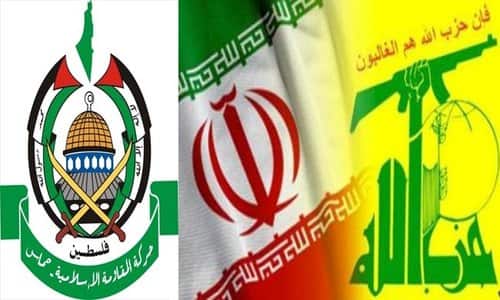
Hamas is rearming and refusing to surrender its weapons. Hezbollah, under growing internal pressure inside Lebanon, continues to resist disarmament. And Iran, the gravitational force behind both groups, is steadily rebuilding its ballistic missile stockpiles.
Now comes the political signal that suggests the current moment may be only an intermission, not an ending: Israeli Prime Minister Benjamin Netanyahu is widely expected to approach President Trump later this month with a renewed, comprehensive plan to confront all three actors. If that happens, it will mark a recognition of an uncomfortable truth--piecemeal solutions have failed, and the region is, once again, back to square one.
Hamas: Defeat Without Surrender
Hamas's refusal to disarm is not surprising; it is foundational to the group's identity. Armed resistance is not merely a tactic--it is the ideology. Even after catastrophic losses in Gaza, Hamas has demonstrated a familiar pattern seen across insurgent movements for decades: absorb punishment, retreat underground, regroup, and rearm.
This is the strategic flaw of inconclusive warfare. Without a decisive end to a group's military capability and its governing legitimacy, defeat becomes temporary. Hamas understands time is its ally. Each pause allows it to recruit, reconstitute command structures, and restock weapons through smuggling networks that have proven resilient for years. In that sense, the war may have severely damaged Hamas--but it did not end it.
Hezbollah: Armed State Within a State
Hezbollah presents an even more dangerous dilemma. Unlike Hamas, Hezbollah is deeply embedded within a sovereign country. It operates as both a political party and a heavily armed militia, fielding an arsenal that rivals many national armies.
Pressure within Lebanon to disarm Hezbollah has intensified as the country collapses economically and politically. Yet Hezbollah has refused every call to lay down its weapons, insisting that its arms are necessary to "defend Lebanon"--even as many Lebanese quietly acknowledge that those same weapons make Lebanon a permanent battlefield-in-waiting.
This stalemate is unsustainable. History shows that militias that outgun the state eventually become the state--or destroy it. Hezbollah's continued rearmament is not just a threat to Israel; it is a slow suffocation of Lebanon itself.
Iran: The Strategic Engine
Behind both groups stands Iran, rebuilding what sanctions, sabotage, and strikes have delayed but never eliminated. Tehran's ballistic missile program is the backbone of its regional power projection. While diplomacy has bought time, it has not changed Iran's strategic ambition: to encircle Israel, deter Western intervention, and dominate the Middle East through proxies rather than direct war--until it no longer has to.
Iran has learned its own lessons from history. Delay negotiations, compartmentalize crises, and rebuild quietly while the world focuses elsewhere. The result is the same cycle repeating, only with higher stakes and deadlier weapons.
The Lesson We Refuse to Learn
The central lesson of history is brutally simple: if your enemy survives intact, they will try again. From post-World War I Europe to modern insurgencies in Iraq and Afghanistan, incomplete victories invite future wars. Ceasefires without disarmament. Negotiations without enforcement. Warnings without consequences.
This is how conflicts are not resolved--but postponed.
What Happens Next?
If Netanyahu does bring a comprehensive plan to Trump, it may reflect a shift away from managing threats separately toward confronting them as a unified axis. That could mean intensified pressure on Iran, firmer red lines for Hezbollah, and a refusal to allow Hamas any path back to military relevance.
But such an approach carries enormous risk. Regional war would no longer be hypothetical. Iran could respond directly. Hezbollah could unleash its full arsenal. The global economy--already fragile--would feel the shockwaves immediately.
Yet the alternative may be worse: allowing these forces to regroup until the next war is larger, bloodier, and unavoidable.
Despite the world's desire for peace, history suggests peace without decisive outcomes is an illusion. As 2026 approaches, the signs are troublingly clear. The players are rearming. The grievances remain. And the lesson--that unresolved wars always return--has once again gone unheeded.