
Tulips Blooming In The Desert: A Living Testimony Of Christian Love For Israel
 By PNW Staff January 13, 2026
Share this article:
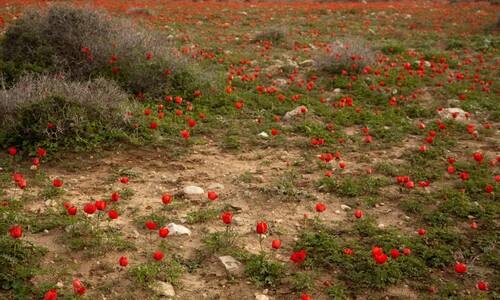
In a season when Israel is too often seen through the lens of war, grief, and isolation, a quieter and far more hopeful story is unfolding--one rooted not in politics, but in soil. Across Israel, and especially along the battered Gaza border, red, yellow, orange, and white tulips are beginning to bloom. They are not accidental. They are intentional. And they are a gift of love from Dutch Christians to the Jewish people.
This year, 150,000 tulip bulbs donated by Christians from the Netherlands were planted throughout Israel as part of a project that has been quietly growing for more than 25 years. More than 50,000 of those tulips are now emerging in communities along the Gaza border--areas that suffered immense trauma following the October 7 Hamas invasion. The project, organized by Christians for Israel (CVI), deliberately focused on the places that endured the deepest wounds, sending a message that suffering does not get the final word.
"These places that suffered the most need a little more attention," said project coordinator Johan van der Ham. His words reflect more than logistical planning; they reveal a theology of presence. While global headlines often portray Israel as isolated or condemned, these blooming fields declare another reality: Israel is loved, remembered, and prayed for by countless Christians around the world.
This year's planting was done in partnership with the Tekuma Directorate, tasked with rehabilitating devastated regions. Kindergarten children in communities like Eshkol, Sdot Negev, and Hof Ashkelon participated, bending their knees to place bulbs into the ground. There is something profoundly symbolic about that image--children planting life where death once tried to reign. As CVI International Director Leon Meijer observed, touching the soil together becomes a reminder that Israel does not stand alone.
Tulips may be a national symbol of the Netherlands, but they also carry deeper meaning in Israel. Some species grow wild in the land, and van der Ham noted that the flower reflects a promise from the Book of Amos--that the Jewish people, once planted in their land, would never again be uprooted. In that sense, these tulips are not merely flowers; they are a declaration of faith.
Yet this story of blooming does not stop with tulips. It continues in one of Israel's most astonishing modern miracles: the transformation of desert into fertile land through innovation. Long before the world spoke about sustainability, Israel pioneered drip irrigation technology--delivering precise amounts of water directly to plant roots, minimizing waste, and maximizing growth. What once seemed impossible--farming in arid, hostile terrain--has become routine.
Today, Israeli drip irrigation systems are used across the globe, helping feed millions and conserve water in drought-stricken regions. Once again, Israel has done what Scripture hinted it would do: make the wilderness rejoice. Fields flourish where sand once ruled. Orchards thrive where rainfall is scarce. The land itself seems to testify.
For Christian believers, this is not just impressive technology--it is prophetic resonance. Isaiah 35:1 declares, "The wilderness and the dry land shall be glad; the desert shall rejoice and blossom like the rose." Ezekiel 36 speaks of mountains yielding fruit and desolate cities being rebuilt. These verses were once read with longing and faith. Today, they are increasingly read with recognition.
The tulips blooming along Israel's borders are a small but powerful sign within that larger story. They represent friendship in a time of hostility, faith in a time of fear, and hope in a time of grief. They remind us that God often works through the faithful obedience of His people--sometimes through grand miracles, and sometimes through something as simple as planting a bulb in wounded soil.
For Christians, this is good news worth celebrating. Not because it ignores Israel's pain, but because it insists that pain will not have the final word. Life is breaking through. Color is returning. And just as the prophets foretold, the land is blooming again--this time with tulips, technology, and timeless promises fulfilled.