
A Simulated Russian Incursion Tests NATO - And It Fails Quickly
 By PNW Staff February 09, 2026
Share this article:
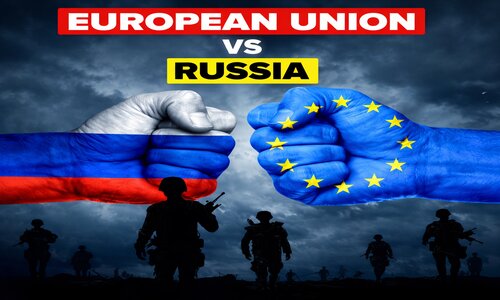
Europe likes to speak the language of resolve. Leaders invoke unity, deterrence, and "never again." Yet a recent wargame conducted in Germany cuts through the rhetoric with uncomfortable clarity: Europe may be preparing for war with Russia--but it is nowhere near ready to fight one on its own.
The exercise, organized by Die Welt in cooperation with the German Wargaming Center at Helmut Schmidt University, simulated a Russian incursion into Lithuania in October 2026. What unfolded was not a massive armored thrust or a dramatic blitzkrieg. Instead, it was something far more unsettling: a limited, plausibly deniable operation that exploited hesitation, political division, and the absence of decisive American leadership. Within days, NATO's credibility collapsed in the game, and Russia achieved strategic dominance in the Baltics with a surprisingly small force.
That outcome should alarm every European capital.
What the Wargame Actually Revealed
The scenario hinged on Kaliningrad, Russia's heavily militarized exclave wedged between Poland and Lithuania. Using the pretext of a fabricated humanitarian crisis, Moscow launched a "limited" intervention to seize Marijampole, a Lithuanian city of just 35,000 people--but one that sits astride a critical highway junction connecting the Baltic states to the rest of NATO.
The brilliance, from Russia's perspective, was not military might but narrative control. The incursion was framed as humanitarian, muddying the waters just enough for Washington--under a disengaged or skeptical U.S. administration--to decline invoking NATO's Article 5. Germany hesitated. Poland mobilized but stopped short of crossing the border. Even German troops already deployed in Lithuania were neutralized without a firefight, their movement blocked by drone-laid mines.
The lesson was brutal: deterrence failed not because NATO lacked soldiers or tanks, but because Russia correctly judged that Europe would argue while territory was taken.
As one participant who role-played Russia's top general put it, the outcome hinged on belief. Moscow believed Germany would hesitate--and that belief proved enough to win.
The Baltic Weak Point
The wargame exposed a geographic truth Europe has long known but preferred not to dwell on. Lithuania, Latvia, and Estonia are connected to the rest of NATO by a narrow and vulnerable land corridor. A single strategic highway--the Via Baltica--carries not only military reinforcements but the economic lifeblood of the region.
Control that chokepoint, even temporarily, and the Baltics are isolated.
In the exercise, Russia achieved this with roughly 15,000 troops--hardly an overwhelming force. The rest was accomplished through hybrid tactics: information warfare, humanitarian pretexts, cyber pressure, and the calculated exploitation of NATO's internal decision-making process. The alliance, designed to deter clear-cut aggression, struggled when faced with something deliberately ambiguous.
That ambiguity is not accidental. It is doctrine.
Why "Time" Is the Most Dangerous Illusion
For years, European planners operated under the assumption that Russia would not be capable of threatening NATO territory until closer to 2029. That timeline is now rapidly eroding. Russia has reoriented its economy toward war, expanded arms production, and continues to recruit tens of thousands of troops each month despite heavy losses in Ukraine.
More importantly, Russia may not need to "win" a war to achieve its goals. It only needs to prove that NATO cannot respond decisively and quickly.
A limited incursion, framed as humanitarian, designed to test Article 5 rather than trigger it, could fracture the alliance politically even if it fails militarily. The wargame suggests such a move could succeed precisely because European leaders are conditioned to de-escalate first and decide later.
That instinct--so deeply embedded after decades of peace--may now be Europe's greatest vulnerability.
Europe's Dependence on America
At the heart of the scenario lies an uncomfortable truth: Europe's security architecture still rests on American will.
European nations collectively dwarf Russia in population and economic power. On paper, they should be able to defend themselves. In practice, they remain dependent on U.S. leadership for intelligence fusion, rapid decision-making, strategic lift, missile defense, and--crucially--political clarity.
The wargame made clear what many European officials privately fear: absent strong and immediate U.S. backing, Europe struggles to act as a single strategic actor. Decisions slow. Red lines blur. Russia advances not because it is unstoppable, but because Europe is uncertain.
This dependence becomes even more precarious in an era of strained transatlantic relations. Disputes over Ukraine, trade, and broader strategic priorities have already raised doubts in European capitals about Washington's reliability. Moscow is watching closely--and learning.
The Bigger Picture
Russia does not need to conquer Europe. It only needs to demonstrate that borders can be changed, alliances paralyzed, and commitments questioned. A small city. A single highway. A few days of hesitation.
That is the scale of the risk revealed by this wargame.
Europe is spending more on defense. It is training more troops. But readiness is not just hardware--it is mindset. It is the willingness to act quickly, decisively, and collectively, even when the facts are deliberately obscured and the narrative is contested.
Until Europe can do that without waiting for Washington to lead, its vulnerability will remain. And Russia, opportunistic and patient, will continue to probe for the moment when hesitation becomes opportunity.
The wargame was fictional. The warning is not.