
Logged And Tracked: How License Plate Readers Could Map Your Entire Life
 By PNW Staff May 04, 2026
Share this article:
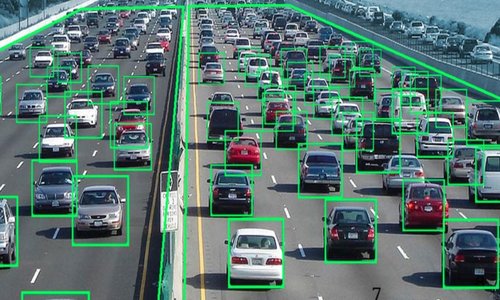
What began as a tool to catch criminals is quietly becoming something far more powerful-and far more dangerous. Across the United States, more than 80,000 automated license plate reader (ALPR) cameras-many deployed by Flock Safety--are scanning, recording, and storing the movements of millions of vehicles every single day.
These systems promise safety. But increasingly, they are revealing something else: how easily surveillance infrastructure can be turned inward on the very people it was meant to protect.
A recent report highlighted a disturbing reality--law enforcement officers have used these systems not just for investigations, but to track romantic partners, exes, and even strangers. At least 14 documented cases uncovered by the Institute for Justice show officers allegedly abusing access to track individuals for personal reasons. In nearly every case, consequences followed. But the deeper issue remains: if individuals with limited authority can misuse such tools, what happens when institutions decide to use them systematically?
This is where the conversation shifts from misconduct... to potential.
Because ALPR systems don't just capture license plates--they capture patterns, routines, and lives.
1. The Quiet Mapping of Faith and Belief
Consider a simple Sunday morning.
Dozens--sometimes hundreds--of vehicles pull into church parking lots across America. Cameras positioned on nearby roads or intersections log each plate. They log when cars arrive. When they leave. How often they return.
Now imagine that data compiled over weeks, months, years.
It would not take sophisticated artificial intelligence to build a database of regular churchgoers. Patterns would emerge almost instantly: who attends weekly, who comes occasionally, who stopped coming altogether. Cross-reference that with other data--home addresses, workplaces--and suddenly, you don't just have a list of cars. You have a map of religious life.
Today, that may sound hypothetical. But the underlying capability already exists.
And history offers a sobering reminder: governments have not always treated religious populations with neutrality. In less stable times, such data could be used to monitor, pressure, or even target communities of faith. What begins as passive observation can become active scrutiny.
2. Tracking Dissent Before It Begins
License plate readers don't just see individuals--they see gatherings.
Protests, political rallies, community meetings--all of them generate traffic patterns that are easily captured. A few cameras placed strategically can log nearly every vehicle attending an event. Over time, that data can identify repeat participants.
This raises a critical question: what happens when dissent becomes trackable?
A government--local, state, or federal--could theoretically compile lists of individuals who attend certain protests or political events. Not based on suspicion of wrongdoing, but simply based on presence. With enough data, it becomes possible to identify organizers, frequent attendees, and networks of association.
Even if never acted upon, the mere existence of such a capability can have a chilling effect. People may begin to ask themselves: Is attending this event worth being tracked?
Freedom doesn't always disappear with force. Sometimes it erodes quietly, through awareness that someone is watching.
3. Building a Comprehensive Movement Profile
Perhaps the most far-reaching potential lies in aggregation.
Individually, a single scan of a license plate reveals very little. But when thousands of scans are compiled, a detailed portrait of a person's life begins to form. Where they work. Where they shop. Who they visit. What routes they take. When they travel. How often they leave home.
This is not speculation--it is the natural outcome of large-scale data collection.
Now imagine that database combined with other systems: toll records, facial recognition, mobile location data, digital payment history. The result is something unprecedented--a near-complete behavioral map of ordinary citizens.
Such a system doesn't require warrants in the traditional sense if access controls remain loose. As critics have pointed out, in many cases, officers can query databases with minimal justification--sometimes little more than typing a reason into a field.
That is not robust oversight. That is trust-based access to powerful tools.
And trust, history shows, is not always enough.
The Illusion of "We Can Have It All"
Supporters of ALPR systems, including leadership at Flock Safety, often argue that safety and civil liberties can coexist--that technology can deliver both security and freedom.
It's an appealing idea.
But it assumes perfect restraint in an imperfect world.
The recent misuse cases exposed by the Institute for Justice are not just isolated incidents--they are warning signs. They show that when vast amounts of personal movement data are made easily accessible, misuse is not just possible--it is inevitable.
And if misuse occurs at the individual level, it raises a more pressing concern: what happens when misuse becomes policy?
A Line That Once Crossed Is Rarely Redrawn
Surveillance systems rarely shrink. They expand. They integrate. They become normalized.
The danger is not just what these tools can do today--but what they make possible tomorrow.
Because once a society accepts that every movement can be logged, stored, and analyzed, it has already crossed a line that is difficult to reverse.
The question is no longer whether the technology works.
It's whether we fully understand what we are building--and who might one day control it.