
Big Brother Wants To Take Us For A Ride
 By Tom Olago February 04, 2016
Share this article:

If you thought your privacy was only at risk through online transactions and by walking the city streets, think again. Indications are that you are just as vulnerable to privacy violations when you are in your car. Virtually everywhere you drive, extensive and elaborate networks have been set up to monitor you, your vehicle and travel routes.
Statistics that support this assertion are startling. According to Ian Drury for the dailymail.co.uk, a network of around 8,300 'Big Brother' spy cameras takes photos of about 30 million plate numbers each day in the U.K. A police database exists that contains details of 22 billion vehicle journeys.
Britain's surveillance Czar Tony Porter has warned that the database is illegal intrusive and prone to abuse. As such, legal action is now being threatened against the authorities for breaches of privacy. Senior officers, however, claim the systems and records are invaluable in preventing and solving serious crimes and terrorist attacks.
A Wall Street Journal report published a year ago explained that law enforcement was particularly keen at that time on the control of drug trafficking via the Drug Enforcement Administration.
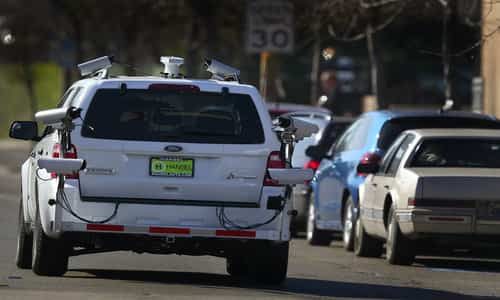
The Automatic Number Plate Recognition (ANPR) technology is also fitted to police vehicles and is used to find stolen cars and tackle uninsured drivers. Each time a vehicle passes an ANPR camera it takes a picture of the plate number and the front of the car, including the driver's face.
According to Porter, 'There is no statutory authority for the creation of the national ANPR database, its creation was never agreed to by Parliament, and no report on its operation has even been laid before Parliament
.
Porter is not short of support either. Daniel Nesbitt, research director of pressure group Big Brother Watch, said in part: "It's now virtually impossible for motorists to travel without having their details stored, regardless of whether they are doing anything wrong."
Owners of cars slated for repossession have much more to worry about. In the United States, repossession firms value automatic license plate readers as they make identification and recovery processes easier. A year back, Marnie Eisenstadt for Syracuse.com explained that these firms share data and that the largest database of license plate scans (2 billion records and growing) is owned by a private company that boasts it has eyes in every city in the U.S.
Eisenstadt further reported that the data, including the license plate number and where the picture was taken, is then sold again to global information brokering companies. The data's life becomes endless in systems where license plate records are bundled with other personal information and sold, over and over.
The key issue for most states and civil liberties organizations is that there do not appear to be proper and enforceable controls to manage data privacy and retention periods. As a result, private companies are building massive databases of the same records, largely unchecked by federal or state law.
And once the genie is out of the bottle, virtually anything is possible. According to Jennifer Lynch, an attorney with the Electronic Frontier Foundation, the practical uses of the data are both "infinite and chilling".
Many potential opportunities for privacy abuse have already been identified. Car insurance companies, life and medical insurance, potential employers, private investigators, and divorce lawyers are just a few of the stakeholders privy to information that they do not necessarily need or have a right to.
An example given was of TransUnion, one of the companies that combines Department of Motor Vehicles (DMV) records with license plate data and other records. Eisenstadt describes the process:
"Type in one name. Up pops a map of where your car has been spotted over the course of the past three months. Mouse over the location and the map tells you what each place is. A few more mouse clicks show your phone numbers, email addresses, social media accounts and home addresses. Yet another few taps on the keyboard and there is social network work map, showing you, your family members, spouses, friends, acquaintances. Just like that, a stranger--perhaps a private detective or a risk manager -- knows you well. What will you ever know about this search? Likely nothing".
This is just the beginning. Business Insider's Matthew DeBord, commented that data collection is the "glue that binds up" both self-driving cars and soon-to-be-released cars communicating to one another via vehicle-to-vehicle communications.
"General Motors has made a big bet on high-speed wireless connectivity throughout its vehicle fleet," he wrote. "Luxury carmakers such as BMW and Audi are rapidly enhancing the ability of their cars to be as digitally enabled as smartphones, and Google and Apple are aggressively experimenting with both software and hardware, through Android Auto, self-driving cars, and Apple Car Play."
The Department of Transportation is already looking at requiring vehicle-to-vehicle communications to be installed in every new car and truck sold in the U.S. which would force vehicles to share data such as speed and direction with each other via Wi-Fi-style technology under the guise of "accident prevention."
"Our goal is to see this technology put in place as soon as possible," Transportation Secretary Antony Foxx said.
Insurance companies are also very interested in incentivizing the ability to track your driving habits and mileage in order to offer reduced rates.
Safety and saving money seem awfully powerful incentives to let Big Brother join us the next time we go for a drive.