
When Athletes Say "No": Growing Pushback Against Mandatory Pride Promotions
 By PNW Staff June 19, 2026
Share this article:
For years, professional sports leagues have increasingly embraced social causes as part of their public identity. Whether it is racial justice campaigns, environmental initiatives, political messaging, or Pride celebrations, teams have sought to position themselves as advocates for causes extending far beyond the playing field.
Yet a growing number of athletes are asking an important question: Where does support end and compelled participation begin?
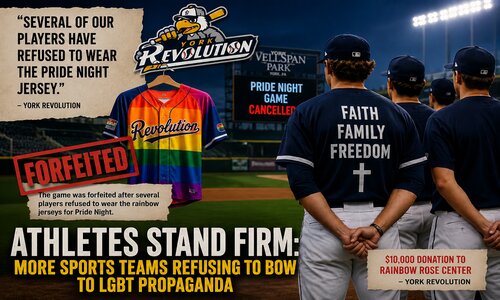
That question resurfaced this week when the York Revolution, an independent professional baseball team in Pennsylvania, forfeited a scheduled game after several players refused to wear special Pride Night jerseys featuring rainbow-themed designs.
The organization expressed disappointment in a public statement, noting that the team's annual Pride Night would continue despite the game being canceled. Rather than force the players to wear uniforms they objected to, management chose to forfeit the contest. The club also announced a $10,000 donation to the Rainbow Rose Center, a local LGBTQ advocacy organization.
What makes the story significant is not merely the canceled game. It is what it reveals about a growing divide between sports organizations and athletes who believe they should not be compelled to publicly endorse causes that conflict with their personal convictions.
The obvious question is one many fans have been asking for years: If teams regularly dedicate nights to Pride causes, should athletes be expected to wear uniforms promoting every social movement that management chooses to celebrate?
Would players be required to wear jerseys supporting political candidates? Religious organizations? Pro-life causes? Immigration advocacy groups? Climate activism campaigns? If not, why is one particular cause treated differently?
Supporters of Pride Nights often argue that the events are about inclusion and welcoming everyone into the stadium. Critics respond that inclusion should not require ideological participation.
There is a meaningful difference between treating every fan with respect and requiring athletes to visibly endorse a message they do not personally support.
This debate is hardly new.
In recent years, several professional athletes have declined participation in Pride-themed events. A number of players in Major League Baseball have opted out of wearing Pride uniforms during designated celebrations. Members of the Tampa Bay Rays made national headlines when several players declined to wear rainbow-themed logos on their uniforms, citing religious convictions.
Similar controversies have occurred in the NHL. Multiple hockey players refused to participate in Pride jersey promotions, leading the league eventually to discontinue special warmup jerseys entirely. The NHL's decision came after repeated disputes involving players from different teams who objected on religious or personal grounds.
The lesson many sports organizations seem reluctant to acknowledge is that forcing ideological conformity rarely produces unity.
In fact, it often creates the opposite effect.
Athletes come from diverse backgrounds, cultures, and faith traditions. Many are Christians or members of other religious communities whose beliefs about sexuality differ significantly from modern cultural expectations. These players may gladly compete alongside teammates from every background while simultaneously declining to endorse messages they believe conflict with their faith.
That distinction matters.
A player refusing to wear a themed jersey is not necessarily expressing hostility toward individuals. In many cases, they are simply asking for the same freedom of conscience that society claims to value.
Ironically, some of the strongest reactions often come from organizations that publicly champion diversity and inclusion. Diversity, however, is not truly diversity if it excludes people with traditional religious beliefs.
The York Revolution incident may ultimately be remembered as another sign that the cultural tide is shifting. Increasing numbers of athletes appear willing to accept criticism rather than compromise deeply held convictions. Whether one agrees with their beliefs or not, that willingness to stand apart from the crowd requires courage.
Sports fans tune in to watch competition, teamwork, and athletic excellence. They do not all share the same political views, religious convictions, or social priorities. Perhaps the healthiest path forward is one that allows teams to host community events while also respecting the conscience rights of players who choose not to participate in symbolic endorsements.
The real test of tolerance is not how we treat people who agree with us. It is how we treat those who respectfully decline.
The York players made their choice. Their organization made its own. The controversy serves as a reminder that the debate over conscience, conviction, and compelled expression in sports is far from over--and more athletes appear willing than ever to take a stand when those values collide.