From Costco To The Bunker: Americans Prepare For The Worst
 By PNW Staff November 21, 2026
Share this article:
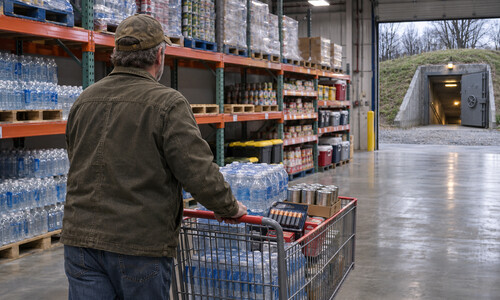
The carts are getting heavier. Bottled water, rice, canned goods, batteries, paper products—items most families buy a little at a time are suddenly going into Costco carts by the case.
After weeks of unsettling disruptions, Americans are asking a question that once sounded extreme: What would we do if the systems we rely on stopped working?
The signs of stockpiling are showing up in stores and online. Costco has reported increased buying of water, rice, canned goods, paper products, generators and batteries. An analyst report said 21 of the retailer’s 26 higher-priced generators were listed as sold out online. Some shoppers say they have found water shelves running low at their local stores.
For some, the answer is a fuller pantry. For others, it means a generator, portable power station, emergency radio, extra fuel or a supply of medicine. Families are filling their gas tanks, keeping cash at home and thinking about how they would contact one another if phones went dark.
And some are going far beyond the basics.
Bunker sellers are reporting a surge of interest from people who want a protected place to ride out the worst. One California seller said he was selling a bomb shelter a day in many cases. Depending on size and equipment, these underground shelters can cost thousands of dollars or reach into the millions.
A bunker may seem like an extreme response. But its appeal is easy to understand: It promises a refuge from the uncertainty outside. The same impulse is sending people to warehouse stores for water and food, to hardware stores for generators, and online for survival kits and advice.
The recent outages have made that uncertainty feel personal. When email stops working, flights are grounded, banking services are disrupted and people cannot make a simple payment, the fragility of modern life is suddenly visible. Most of us depend on electricity, internet access, phones, transportation and stores that are stocked every day. We rarely think about how many links in that chain have to keep working—until one breaks.
That is why preparedness is no longer just a hobby for dedicated survivalists. People who once laughed at “preppers” are now checking their pantries and wondering what they would need if normal routines were interrupted. Some have spent years preparing. Others are starting with bottled water and canned food.
There is practical wisdom in that. A household with basic supplies is in a stronger position when a storm, outage or other emergency disrupts daily life. Knowing how to preserve food, use a radio, provide first aid or help a neighbor can matter as much as owning equipment. Preparedness is not only about what is stored in a basement; it is also about skills, sound judgment and people willing to look out for one another.
But the most important question is not how deep a bunker is or how many weeks of food sit on a shelf. It is whether we are ready for the future we cannot control.
Jesus asked, “What shall it profit a man, if he shall gain the whole world, and lose his own soul?” A person can stock a shelter with supplies and still be unprepared for eternity. A generator can keep the lights on, but it cannot give the heart lasting peace.
Christians can prepare wisely for hardship while placing their ultimate trust in God. We can fill the pantry, make a family plan and help our neighbors without living in fear. The Lord knew these days would come. The outages, the uncertainty and the anxiety now filling people’s conversations do not surprise Him, and they have not placed the future beyond His control.
Peace does not come from believing that nothing bad can happen. It comes from knowing that, whatever happens, God remains sovereign and faithful. When we entrust our future to Him, we can face the times in which we live with courage—not because we know what tomorrow holds, but because we know the One who holds it.