
Americans Bracing For Violence After Election Day
 By PNW Staff October 29, 2024
Share this article:
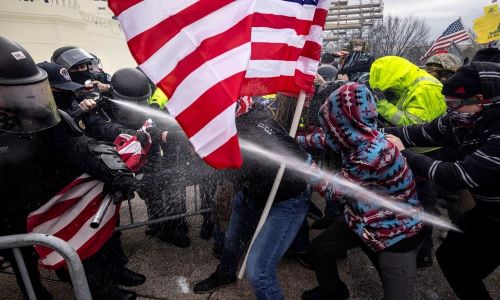
In an era where political rhetoric has intensified, both sides of the aisle are expressing heightened fears about the stability of American democracy. A Scripps News/Ipsos poll reveals that over 60% of Americans believe violence on or after Election Day, November 5, is "somewhat" or "very likely."
With 70% of Democrats and 59% of Republicans expecting unrest, and particularly high concerns among battleground state voters like Wisconsin (72%), the specter of post-election violence looms large. Conservative Americans, in particular, see these threats not as isolated incidents but as part of a broader erosion of public trust caused by political overreach, biased media narratives, and what they perceive as insecure election practices.
These concerns have been exacerbated by unprecedented legal and political attacks on former President Donald Trump, with attempts to prosecute him and even disqualify him from the ballot in some states. Many Republicans view these efforts as a form of political warfare aimed at disenfranchising millions of Trump supporters by preventing them from casting their votes for the candidate of their choice.
Election Integrity and Widespread Concerns Over Fraud
According to the poll, a significant number of Republicans (over 40%) indicated that if their candidate lost, they would attribute the loss to widespread election fraud. This concern highlights a persistent worry among conservatives about the security and fairness of elections, a concern that has led to calls for reform in several Republican-led states.
For many conservative Americans, traditional in-person voting remains the most reliable method. Only about one-third of Republicans and less than half of Independents expressed confidence in the security of ballot drop boxes, while trust in mail-in voting is only slightly higher (38% among Republicans and 51% among Independents).
These low levels of confidence in alternative voting methods are not seen as unwarranted skepticism by Republicans; rather, they are considered logical reactions to irregularities observed in past elections, such as delayed counts and reports of lost or mishandled ballots.
To address these concerns, conservative-led states have passed legislation to tighten voting regulations, including requiring voter ID, reducing reliance on mail-in ballots, and implementing stricter oversight of ballot drop boxes. While these efforts are often characterized by Democrats as voter suppression, conservatives argue that they are necessary to protect the integrity of the electoral process.
Mainstream Media, Political Polarization, and the Public's Perception
Public trust in mainstream media is another issue shaping conservative views on election integrity and post-election violence. Many Republicans feel that mainstream media disproportionately amplifies accusations against conservative figures, while downplaying or ignoring similar accusations against Democrats.
For example, Trump's response to the 2020 election results and the January 6 events received continuous media scrutiny, while statements from current administration officials labeling Trump and his supporters as threats to democracy have faced minimal critique. This perceived double standard has led many conservatives to seek information from alternative news sources, including Fox News and Newsmax, which are seen as more reflective of conservative perspectives and values.
This media bias, according to conservatives, contributes to a narrative that vilifies right-leaning Americans as threats, while portraying left-leaning political figures as defenders of democracy. As a result, conservatives are increasingly skeptical of traditional media's role in informing the public, often turning to independent and alternative media to gain what they believe is a more balanced view of current events. This divide in media consumption is exacerbating the country's political polarization, with each side receiving significantly different versions of the same story.
Legal Challenges and the Question of Political Weaponization
The Scripps News/Ipsos poll indicates that a large majority of Americans, including 77% of Republicans and 85% of Democrats, are willing to accept election results, even if their preferred candidate loses, as long as legal challenges are fairly pursued and court rulings respected. However, many Republicans remain deeply concerned about what they see as the political weaponization of the judiciary. Conservative voters argue that the recent legal battles facing Trump -- especially in battleground states like Georgia -- are part of a calculated attempt to undermine his 2024 campaign.
Republicans assert that this perceived "lawfare" is not just a threat to Trump's candidacy but to the democratic process itself. Many GOP supporters worry that politically motivated lawsuits could set a dangerous precedent, where judicial proceedings are used to block candidates, rather than allowing the public to decide at the polls. This sentiment has fueled calls within the party for greater transparency and checks on the use of the judicial system in politically charged cases. Without such oversight, they argue, voters may feel that their voices are being drowned out by legal maneuvers, which could lead to further unrest.
Law and Order: The Conservative Approach to Political Unrest
Amid concerns over potential post-election violence, Republicans emphasize the importance of upholding law and order. Conservative leaders argue that, while political violence is often portrayed in the media as stemming primarily from right-wing groups, acts of violence from left-wing groups are often underreported. For instance, while the January 6 Capitol incident received extensive media attention, violent protests during the summer of 2020 and ongoing attacks on pro-life centers have garnered comparatively little coverage.
Conservatives argue that this skewed media portrayal fuels a misperception that unfairly casts right-leaning Americans as violent extremists. To counter this perception, Republicans generally support policies aimed at strengthening police departments and giving law enforcement the resources necessary to maintain public safety. They argue that calls to "defund the police," which gained traction among progressive activists, undermine society's ability to respond effectively to threats of political violence, and ultimately erode public confidence in the nation's institutions.
The GOP's commitment to maintaining law and order is coupled with a firm stance that peaceful protests must not include violence or destruction of property. Conservatives believe that stricter enforcement of laws against rioting and vandalism will help deter future incidents of unrest, regardless of the political affiliation of those involved.
Big Tech, Social Media, and the Question of Free Speech
In addition to media concerns, Big Tech has also become a significant factor in the debate over election integrity and free speech. Many conservatives contend that social media platforms, including Facebook, Twitter (now X), and Google, wield disproportionate influence over public discourse by selectively censoring conservative viewpoints. Instances of content suppression, such as the initial ban on stories about Hunter Biden's laptop and the removal of accounts questioning COVID-19 policies, are seen by Republicans as clear evidence of political bias within Silicon Valley.
Efforts by Republican lawmakers to curb Big Tech's influence have included proposals to reform Section 230, which shields tech companies from liability for content posted by their users. Conservatives argue that without meaningful reform, Big Tech companies will continue to act as gatekeepers of information, favoring liberal viewpoints while stifling conservative ones. This belief in pervasive censorship has only deepened conservatives' distrust in mainstream media and tech companies, leading many to migrate to alternative platforms that prioritize free speech.
A Referendum on American Values
The 2024 election cycle represents more than a choice between political candidates for conservatives; it is a referendum on American values and the integrity of democratic institutions. With both parties expressing heightened concerns about election legitimacy and post-election violence, Republicans view the 2024 election as a test of the nation's commitment to law and order, individual liberties, and freedom of speech.
As shown in the Scripps News/Ipsos poll, the stakes are high: nearly three-quarters of Americans, including 77% of Republicans, are prepared to accept the election results if due process is followed. Yet, over 60% of all Americans fear the possibility of violence after Election Day, underscoring a pervasive unease about the future of the democratic process. For conservatives, the solution lies in increased transparency, accountability, and a renewed commitment to upholding the Constitution.
In the end, Republicans argue that the best way to restore trust in the system is by supporting policies that strengthen election integrity, enforce the rule of law, and protect free speech. They believe these principles are foundational to a healthy democracy and are hopeful that, by focusing on these values, America can overcome its current divisions and continue to be a beacon of freedom and democracy for generations to come.