
License Plate Readers: AI Is Building A Profile And Tracking Your Every Move
 By PNW Staff August 26, 2025
Share this article:
Imagine driving to Sunday service, visiting a friend, or stopping by a hospital--and knowing that at every turn, an unseen eye records your license plate, your route, and the frequency of your visits. What used to be a fleeting moment of life on the road has become an entry in a permanent file. That's not science fiction. It's happening now, across thousands of American communities, under the quiet rise of license-plate reader technology.
From Rare to Routine in Just a Few Years
Only a decade ago, automatic license plate readers (ALPRs) were niche tools for catching stolen cars. Today, they're everywhere--mounted on police cruisers, lining school zones, or bolted to traffic lights. In Westchester County, New York, a network of 480 cameras scanned over 16 million vehicles in a single week earlier this year.
In Virginia, more than 1,000 Flock Safety cameras log plate data daily, some of which has been accessed in immigration enforcement searches despite official restrictions. Even smaller towns are jumping in: Milford, Connecticut, recently deployed 14 solar-powered ALPRs around highways and schools, expanding a local net of surveillance that includes drones and red-light cameras.
The scale is staggering, and it's accelerating. The result is a patchwork system that, stitched together, forms something close to a national surveillance network.
AI Turns Surveillance Into Suspicion
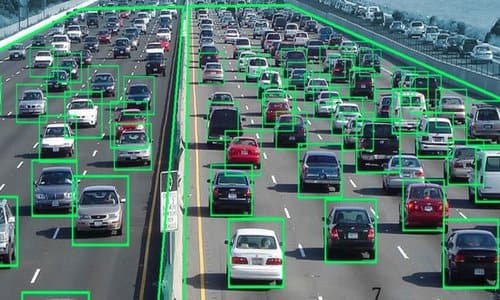
What makes this different from yesterday's traffic cams is artificial intelligence. Companies like Flock, Motorola Solutions, and PlateSmart aren't just snapping plates anymore. Their systems use AI to flag "suspicious" driving patterns, identify vehicles by make, model, and bumper stickers, and stitch together a car's travel history.
Once the data is centralized, it doesn't just say who was where. It builds a profile: who goes to a gun shop every Saturday, who visits a cancer clinic weekly, who pulls into a particular church every Sunday. Multiply that across millions of people, and you no longer just have traffic data--you have a living map of America's private habits.
The Mosaic of Our Lives
Civil liberties groups warn of the "mosaic effect"--where harmless data points, once combined, reveal intimate truths. A late-night stop at a clinic. Weekly trips to a mosque. Frequent visits to an address that isn't your own. It's the kind of detail that used to require human tailing, court warrants, and months of legwork. Now, a simple query can retrieve it in seconds.
And police aren't the only ones with access. Some databases are shared across agencies, some with private companies, and some--as recent leaks showed--even with foreign contractors. In Illinois, ALPR data was used to track a woman seeking an abortion across state lines. In Austin, a review showed that 20% of police searches of ALPR logs lacked documentation, raising questions about casual, unchecked access.
The Fourth Amendment Collision
All of this collides with the Constitution. The Fourth Amendment guarantees protection against unreasonable searches. But what happens when the "search" is automated, constant, and indiscriminate? As Institute for Justice attorney Michael Soyfer warns, ALPRs now track "countless law-abiding people who have never been suspected of any crime."
Courts are beginning to notice. In Norfolk, Virginia, a judge ruled that using a vast web of Flock cameras violated reasonable expectations of privacy. And pressure is growing: the Institute for Justice has launched The Plate Privacy Project, a national campaign pushing back against warrantless surveillance with lawsuits, model legislation, and grassroots activism.
The Chilling Effect
This isn't just a legal issue. It's a cultural one. When people know they're being watched, they change. They take different routes. They hesitate to visit certain places. They censor their own freedom of movement. That's the deeper danger--not just the data collected, but the invisible leash it places on ordinary life.
It's easy to dismiss if you "have nothing to hide." But privacy isn't about hiding. It's about not having to explain every errand, every visit, every friendship to a government database.
Where We Go From Here
The road ahead is clear: without reform, ALPRs will only spread further, their AI will only grow sharper, and the private rhythms of daily life will only become more transparent to unseen eyes. What began as a tool to recover stolen vehicles is mutating into something else entirely: an algorithmic dossier of our lives on the open road.
The Institute for Justice's Plate Privacy Project is one attempt to draw a line. But the broader question remains: Do Americans want to live in a society where every trip to church, clinic, or coffee shop is logged and stored?
If we don't answer that soon, the decision may already be made for us--one camera pole, one database query, and one AI algorithm at a time.