
Microchipping Fears Force Changes To Bill That Allows Tracking People
 By PNW Staff December 22, 2016
Share this article:

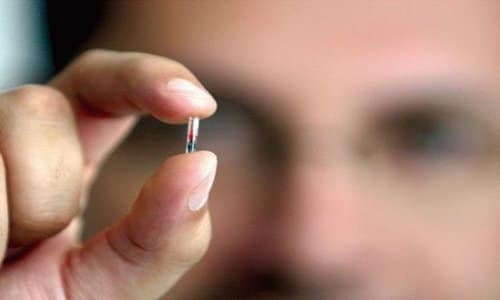
Under the guise of public safety, Democratic and Republican law makers in Washington, DC have pushed for a law that would allow for the implantation of tracking microchips in minors with autism and senior citizens with dementia.
Following the drowning deaths of 9-year-old Kevin Curtis Wills in 2008 and 14-year-old Avonte Oquendo in 2014, both diagnosed with autism, legislators presented Bill H.R. 4919 that would apply to both children and the elderly.
Introduced by Rep. Christ Smith (R., N.J.) the bill, known as Kevin and Avonte's Law, would have allowed for the Attorney General to implement different tracking methods while grants would be given to law enforcement and non-profits for participating and promoting the program, one of which could be microchip tracking.
An expansion of the Missing Alzheimer's Disease Patient Alert Program already in place, the bill would both authorize $2 million for 5 years and extend the program to children with autism as well as see its name changed to Missing Americans Alert Program.
Commenting on the original bill, Rick Manning, President of Americans for Limited Government said, "It is almost too absurd to believe that it is true, but the House Judiciary Committee is considering H.R. 4919 that would allow for the Attorney General to authorize tracking chips to be inserted involuntarily into people who are incapacitated with Alzheimer's and other fatal dementias."
The threat to civil liberties and the slippery slope that this law would rest on should be immediately apparent.
Thankfully, conservative response to the bill forced lawmakers to introduce changes to weaken the law. The bill now requires that the tracking devices be neither invasive nor permanent and that they be voluntary, consented to by the legal guardian of the patient.
Supporters of the bill believe that the changes have addressed the concerns about privacy and government overreach and it has now passed the House in a vote of 436 to 66 and there remains little doubt it will pass the Senate.
A conservative voice of reason in the scramble to submit to more government control, Texas Republican Rep. Louie Gohmert has stated that the bill still represents a dangerous level of overreach and could open the door to expansion or more similar programs in the future. Keep in mind that the original bill was passed with "unanimous consent" in a mostly empty Senate chamber, strategically avoiding even a vote on the matter.
Speaking on the floor of the house this week in opposition to the new law, he said, "While this initiative may have noble intentions, 'small and temporary' programs in the name of safety and security often evolve into permanent and enlarged bureaucracies that infringe on the American people's freedoms. That is exactly what we have here.
A safety problem exists for people with Alzheimer's, autism and other mental health issues, so the fix, we are told, is to have the Department of Justice start a tracking program so we can use some device or method to track these individuals 24/7."
He went on to explain both the concerns with the bill itself as well as how easily it was passed through the Senate without a formal vote. "It is absolutely staggering that the Republican majorities in the House and Senate could be so blind to government overreach that they would allow a federal tracking program, not for criminals in the U.S., not for terrorists, not for illegal immigrants or even immigrants who commit crimes, but for people with 'developmental disabilities' a term that is subject to wide misinterpretation."
Addressing the issue of the bill's passage, he continued, "The Senate Republican leaders even brought it to the floor with almost no one there and asked that the new Big Brother program be passed without even having a vote at all - someone just asks for 'unanimous consent.'
Since no one is advised about the bill being brought up, no one who would object knows to be there, so it passes without anyone ever actually voting for it." The revised bill will now face the Senate once again.
It is terrifying to think that a law authorizing tracking via implanted microchips went both ignored in the media and passed the Senate without even a vote.
Now, a marginally improved law that paves the way for an incremental erosion of liberty, has passed the House and still there is little protest or even coverage.
Wandering of Alzheimer's patients may be a problem, but in some cases the solution is worse. However well-intentioned and limited in scope at first, such programs have a history of expanding and becoming the new normal. It's up to conservatives to hold the line.