
How Liveness Check Increases Trust in Online Platforms
 By
By
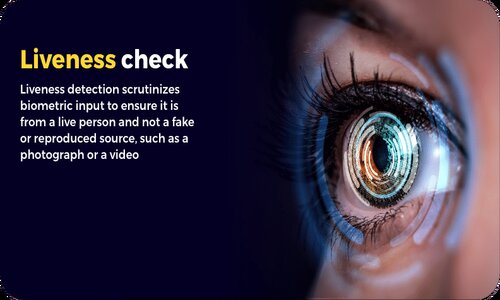
In a world where every click can lead to fraud, online platforms have to stay one step ahead. This is especially important wherever user verification is required — in banks, marketplaces, social networks, and online access systems. One of the key tools that strengthens security and increases user trust is liveness check. In this article, we explain what liveness check is, how it works, and why modern digital services are now hard to imagine without it. Liveness check is a technology that determines whether a real, live person is in front of the camera — not a photo, video, or mask. It is becoming a mandatory part of the identity verification process on many online platforms. Algorithms can analyze facial micro-movements, blinking, lighting changes, and reactions to commands such as turning the head. More advanced systems use 3D facial structure recognition or skin texture analysis. Why is all this necessary? To prevent fraudsters from impersonating users with stolen photos, deepfakes, or pre-recorded videos. These are exactly the threats that liveness check is designed to neutralize. When users know that a platform protects their data and accounts from unauthorized access, trust grows significantly. Liveness check creates a clear message: “This platform takes care of me.” This is especially important in areas such as: Online banking and fintech Online dating platforms Property rental and leasing platforms Educational services and remote testing platforms Liveness verification helps create transparent and secure conditions. No one wants someone else to access their bank account or take an exam on their behalf. Users need to be confident that their identity is verified — and is rejected. Today, biometric technologies and user verification have become essential across dozens of industries. Liveness check is particularly effective in: Remote hiring and online interview systems Registration processes for financial apps and crypto exchanges Online voting and polling platforms Gaming platforms where age and identity verification are critical Another important use case is fighting fake accounts. It is hard to create hundreds of bots if each one has to pass a camera check and prove it is a real person. This improves not only security, but also the overall quality of the user environment. Of course, the stricter the security, the higher the risk of user frustration. But modern liveness check systems work quickly and intuitively. A simple glance at the camera is enough — the algorithm handles the rest. It is crucial that verification does not become an obstacle. That is why leading developers strive to make the process as seamless as possible — without unnecessary steps, delays, or errors. The X-Faces platform works precisely in this direction, making liveness verification reliable while remaining comfortable for everyday users. In the online world, trust is built on verification. And liveness check is a key element of this system. It protects personal data, blocks fraudsters, and helps platforms build honest relationships with users. While some companies hesitate to adopt biometrics, others are already gaining an advantage. Those who care about user security become more trustworthy — and closer to their audience. Want to see how modern biometrics and user verification work without unnecessary friction? Visit X-Faces.org and test liveness check in real conditions. A simple check is a big step toward trust.
What Is Liveness Check and How Does It Work
Liveness Check and User Trust: How They Are Connected
Why Liveness Check Is the Key to Trust
Where Liveness Check Makes Services Better
Balancing Security and Convenience
Conclusion: Trust Starts with a Face
Try Liveness Check in Action