
The Fog of War Just Went Digital: Can The Images In Your Feed Be Trusted?
 By PNW Staff March 05, 2026
Share this article:
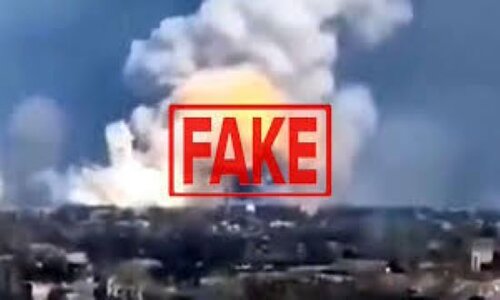
In just five days, a surge of manipulated war imagery has flooded platforms like X, Facebook, and Telegram. Here are five of the most significant examples circulating right now:
1. The "Destroyed" U.S. Radar System in Qatar
One of the most viral images claimed to show an American radar installation in Qatar obliterated by an Iranian drone strike. The post was amplified by the official account of the Tehran Times and quickly approached one million views.
The side-by-side satellite comparison looked authoritative. Clean. Clinical.
But analysis by the Financial Times found glaring signs of AI manipulation. Vehicles visible in a year-old "before" image remained frozen in identical positions in the supposed "after" shot. Shadows fell at the exact same angle. Parts of the building's structure appeared digitally altered while surrounding terrain remained untouched.
Historical satellite archives showed no structural change to the site in years.
The image was persuasive -- and false.
2. The "Inferno" at the U.S. Base Near Erbil
Another image spread rapidly claiming to show catastrophic damage to a U.S. base near Erbil, Iraq. The photo depicted an enormous fireball and thick black smoke engulfing structures.
It was dramatic enough to feel like a turning point in the conflict.
Yet when compared to verified, recent satellite imagery of the location, the layout did not match. Certain buildings were misaligned. Damage patterns contradicted known strike reports. Analysts flagged it as AI-enhanced -- likely built from an existing image but exaggerated digitally to intensify the destruction.
It wasn't just documentation.
It was dramatization.
3. The Colorized "Exclusive" Satellite Shot
A widely circulated image appeared to be a high-resolution color satellite photo attributed to Airbus and watermarked with MizarVision.
The vibrant colors made military positions appear stark and active. Terrain looked freshly disturbed. Equipment stood out sharply.
But the image does not appear on MizarVision's official channels, and the company has warned about accounts falsely distributing imagery under its name.
Experts believe the image may be an AI-upscaled and colorized version of an older black-and-white capture. That subtle addition of color matters. Black-and-white imagery often leaves ambiguity. Color injects clarity -- and emotional weight -- even when the clarity is artificial.
Perception shifts. Conclusions harden. And all of it may be synthetic.
4. The "Rubble" Image of Ayatollah Khamenei
Perhaps the most explosive image of the past five days claimed to show the body of Ayatollah Ali Khamenei being pulled from beneath collapsed debris.
Here is a great example of mixing truth with lies as Khameni was buried in the rubble after US/Israeli airstrikes. However the viral images of his body being pulled out was Ai generated.
The image spread rapidly before any official confirmation. Digital irregularities -- inconsistent lighting, warped debris geometry, and unnatural hand proportions No verified news organization has authenticated the scene but it spread like wildfire across the internet as many people had heard about him being killed in the rubble and were more susceptible to such images.
5. The Fabricated Missile Strike Montage
In the past several days, a composite "satellite overview" montage circulated widely claiming to show simultaneous missile impacts across multiple Middle Eastern sites in a single coordinated barrage.
The graphic stitched together multiple overhead images with glowing impact markers and smoke plumes rising from several bases at once. It was presented as real-time satellite confirmation of a sweeping offensive.
Analysts quickly noticed inconsistencies: identical smoke plumes cloned across different locations, mismatched resolutions between sections of the image, and lighting angles that could not have occurred simultaneously across distant geographies.
The montage was not a captured moment.
It was assembled -- engineered for maximum psychological effect.
And because it looked technical and data-driven, many viewers assumed it was credible.
The Pattern Is the Point
What makes these five cases alarming is not just that they exist -- it's how quickly they travel and how authoritative they appear.
Satellite imagery feels neutral. Mechanical. Scientific.
But the barrier to fabrication has collapsed. What once required state intelligence resources can now be produced with consumer-level AI tools.
And in modern information warfare, a convincing image can move markets, inflame public opinion, or pressure governments before the truth has time to catch up.
The war for territory may unfold overseas.
But the war for your perception is unfolding in your feed -- one synthetic image at a time.