
The Window Of Opportunity & The Largest Regime Decapitation In Modern Warfare
 By PNW Staff March 02, 2026
Share this article:
In modern warfare, timing is often measured in weeks or months of planning. But in this case, history may record that a war's decisive turning point was measured in minutes. "There was a deliberate decision to accelerate the timeline," one source revealed--a choice that transformed a planned strike into what may become known as the most sweeping leadership decapitation operation of the 21st century. What followed was not just an attack. It was a synchronized geopolitical shockwave that dismantled the upper command of a regime in a single morning.
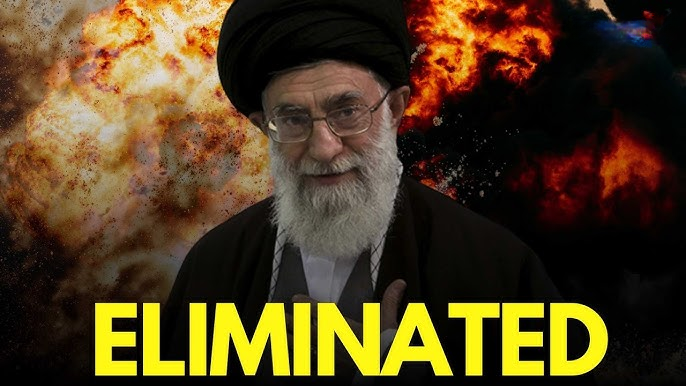
According to intelligence officials familiar with the operation, the breakthrough came when the Central Intelligence Agency tracked the precise movements of Iran's supreme leader, Ayatollah Ali Khamenei. For months, analysts had reportedly monitored his travel patterns, communication channels, and security rotations. Then came the critical development: confirmation that Khamenei and dozens of senior officials would gather at a central leadership compound in Tehran on a Saturday morning.
That intelligence created what military strategists call a "fleeting window of opportunity"--the rare convergence of target certainty, operational readiness, and strategic surprise. Originally, planners in both United States and Israel intended to strike under cover of darkness. But with confirmation of the gathering, leaders reportedly made a rapid decision: move now.
The operation launched at approximately 6 a.m. Israel time. Fighter jets armed with precision long-range munitions lifted off. Two hours and five minutes later, missiles slammed into multiple sites across Tehran. One building housed senior national security officials. Another contained Khamenei himself. The speed was staggering--not only in execution, but in consequence.
Iran's state outlet Islamic Republic News Agency confirmed the deaths of Khamenei and at least two top commanders, while Israeli and U.S. sources claim the toll is far higher. Officials speaking to Fox News said more than 40 senior figures were eliminated in coordinated strikes. If accurate, that number would make the operation one of the most extensive leadership removals ever achieved in a single military action.
Among those reportedly killed were senior figures tied to Iran's strategic and military infrastructure: the head of its military council, top intelligence officials, defense leadership, and key figures associated with weapons development programs. The Israel Defense Forces stated that locations housing Iran's political-security elite were deliberately targeted. The message was unmistakable: this was not a warning shot. It was a surgical dismantling.
Even more striking is how thoroughly the leadership hierarchy appears to have been penetrated. Officials told The New York Times that U.S. intelligence possessed "high fidelity" data on Khamenei's whereabouts--information reportedly refined through surveillance lessons learned during last year's brief but intense 12-day conflict. That earlier confrontation, once seen as a limited engagement, now appears in retrospect to have been a reconnaissance phase that revealed how Iran's top leadership moved under pressure.
Critically, analysts say Iran's own decisions may have amplified the strike's effectiveness. Despite public signals that war preparations were underway, senior leaders still gathered in a single location--a concentration of command authority that made them uniquely vulnerable. One U.S. defense official described the attack as achieving "tactical surprise" despite Tehran's heightened alert status.
The scale of loss is difficult to overstate. Military organizations are built on chains of command, institutional memory, and trust networks. Remove dozens of top figures at once, and the system doesn't just weaken--it risks paralysis. Intelligence insiders say Iran's senior intelligence ranks were "decimated," with only one top officer confirmed to have escaped. In strategic terms, that is not merely a battlefield setback; it is structural disorientation.
Adding to the shock was the reported death of former president Mahmoud Ahmadinejad, a polarizing figure long known for incendiary rhetoric against Israel on the world stage. His presence at or near targeted sites, if confirmed, suggests that the gathering was even more consequential than initially believed.
The roots of this operation stretch back further than this week's headlines. Former officials say the intelligence network used to track Khamenei had existed for years and had already proven capable. In fact, President Donald Trump publicly claimed last year that U.S. intelligence knew where the supreme leader was hiding. What has changed since then, insiders say, is precision: surveillance tools improved, communication intercepts deepened, and predictive modeling sharpened.
In warfare, there are battles--and then there are moments that redefine how wars are fought. This strike may belong to the latter category. Traditional conflicts rely on attrition, territory, and prolonged campaigns. But this operation demonstrated something different: the power of intelligence dominance combined with rapid decision-making. The choice to accelerate the timeline did more than change the hour of attack. It changed the scale of outcome.
Within a single morning, an entire echelon of leadership was erased. Command structures were shattered. Strategic continuity was disrupted. And the psychological effect--both inside Iran and across the region--may prove as significant as the physical destruction.
Wars are often remembered for their longest battles. Yet sometimes they turn on their shortest decisions. In this case, one accelerated timeline may have altered the trajectory of a conflict--and possibly the balance of power in the Middle East--for years to come.