
Why Is CNN Giving Cover For Islamic Terror Suspects In New York?
 By PNW Staff March 11, 2026
Share this article:
In the early hours after a violent attack in New York City, Americans turned to the media for clarity. What they received instead -- at least from one of the nation's most powerful news organizations -- was a lesson in narrative management.
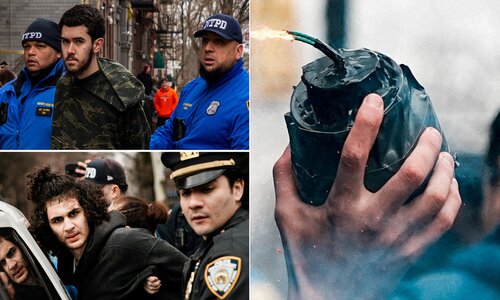
When two men allegedly hurled explosive devices into a protest crowd outside the residence of New York City Mayor Zohran Mamdani near Gracie Mansion, the gravity of the moment seemed obvious. Federal prosecutors would soon charge the suspects with providing material support to a terrorist organization and using a weapon of mass destruction. Authorities indicated the attack appeared to be inspired by the ideology of Islamic State.
But instead of leading with those facts, CNN initially told a very different story.
In a now-deleted social media post, the network described the suspects simply as "Pennsylvania teenagers" whose lives had "drastically changed" after they crossed into New York City during unusually warm weather. According to the framing, what could have been a pleasant day in the city somehow turned tragic after the pair were arrested for throwing homemade bombs into a protest crowd.
Notice what was missing.
The bombs.
The terrorism charges.
The alleged ideological motivation.
Instead, readers were presented with a narrative that almost sounded like the opening scene of a coming-of-age movie -- two young men enjoying a day in the city before fate intervened. Only later in the story did the seriousness of the charges appear.
The suspects, identified as 18-year-old Emir Balat and 19-year-old Ibrahim Kayumi of Pennsylvania, ignited and attempted to detonate two homemade explosive devices. One device was reportedly a mason-jar-style bomb containing TATP -- a highly volatile explosive sometimes called the "Mother of Satan" -- along with nuts and bolts designed to act as shrapnel.
Investigators say the devices ultimately failed to detonate, but authorities believe the suspects intended to cause mass casualties and that the attack was inspired by the terrorist group Islamic State. Law enforcement officials quickly moved to classify the case as potential terrorism. New York Police Commissioner Jessica Tisch publicly stated the attack was being investigated as "ISIS-inspired terrorism."
Yet CNN's initial framing did not reflect that reality.
After fierce backlash online, the network quietly deleted the post and issued a statement acknowledging that it "failed to reflect the gravity of the incident." Even CNN media analyst Brian Stelter criticized the post, though he focused primarily on the social media wording rather than the deeper editorial framing that produced it.
But the episode raises a far larger question than a single poorly written tweet.
Is this simply sloppy journalism -- or something more deliberate?
For years, critics have accused major legacy outlets of soft-pedaling ideologically motivated violence when the perpetrators do not fit a preferred narrative. Incidents involving radical Islamist ideology, in particular, often seem to be framed with unusual caution or euphemism.
The pattern has appeared repeatedly.
During the wave of campus demonstrations tied to the war involving Hamas and Israel, some major outlets described protests featuring chants calling for the destruction of the Jewish state as largely "peaceful." In some cases, demonstrators who openly celebrated the October 7 massacre were framed primarily as activists expressing political frustration.
Similarly, coverage of riots or violent demonstrations has frequently adopted language that minimizes the actions taking place on the ground. Buildings may burn, businesses may be destroyed, and yet headlines often lead with phrases like "mostly peaceful protests."
When the facts clash with the narrative, the narrative often seems to win.
The CNN framing of the New York attack follows this same troubling pattern.
Instead of describing what allegedly occurred -- a bombing attempt tied to extremist ideology -- the network instinctively humanized the suspects. They were portrayed not primarily as men accused of terrorism, but as "teenagers" whose lives suddenly spiraled off course.
That subtle shift matters more than many realize.
Language shapes perception. When journalists describe perpetrators in sympathetic or neutral terms while downplaying their actions, audiences absorb a distorted version of reality. Violence begins to look like an unfortunate misunderstanding rather than a deliberate act.
This is not merely a media ethics issue. It is a national security one.
If major news organizations cannot clearly identify ideological violence when it occurs, the public loses its ability to understand the threats facing the country. Citizens rely on journalists to explain events honestly -- not filter them through political narratives.
The deeper concern is what happens during a far larger crisis.
If a major terrorist attack were to occur tomorrow -- something on the scale of past tragedies -- would networks like CNN report it with clarity and candor? Or would they once again search for softer language, sympathetic framing, and narrative adjustments designed to protect political sensitivities?
Trust in media institutions has already collapsed to historic lows in the United States. Episodes like this only accelerate that decline.
When Americans see journalists describing alleged bomb-throwing suspects as unfortunate teenagers having a bad day, confidence erodes. The public begins to wonder whether reporters are acting as investigators of truth or editors of a preferred storyline.
Journalism's first responsibility has always been simple: tell the truth about what happened.
Not the softened version.
Not the politically convenient version.
The truth.
Because when the next crisis arrives -- and history tells us it will -- the country will need news organizations that report reality as it is, not as they wish it to be.