
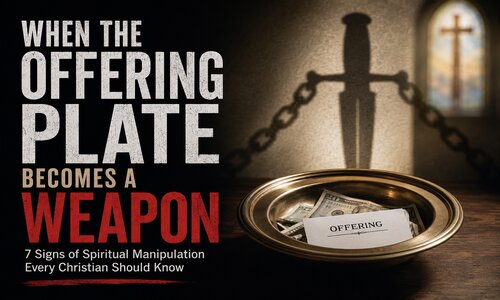
When The Offering Plate Becomes A Weapon: Seven Signs Of Spiritual Manipulation
 By PNW Staff July 17, 2026
Share this article:
A Mississippi pastor recently ignited a firestorm after reportedly posting the names of church members on Facebook who had failed to pay their tithes. Whether the intention was accountability, encouragement, or frustration, the reaction was swift. Christians from across the theological spectrum condemned the move as public shaming rather than biblical shepherding.
The controversy raises a much larger question than one pastor's judgment. It forces Christians to ask an uncomfortable but necessary question:
Where is the line between teaching biblical stewardship and manipulating God's people?
The Bible has much to say about generosity. Jesus spoke often about money because it reveals the condition of our hearts. Scripture encourages believers to give sacrificially, faithfully, and cheerfully. Churches cannot fulfill their mission without the faithful support of God's people.
But nowhere does Scripture suggest that generosity should be extracted through humiliation, intimidation, or public embarrassment.
Unfortunately, stories like this remind us that spiritual manipulation can sometimes wear religious clothing.
Here are seven warning signs every Christian should recognize.
1. Public Shame Replaces Private Shepherding
Jesus laid out a clear pattern for addressing problems among believers. It begins privately, not publicly.
A shepherd protects his sheep. He doesn't embarrass them before the world.
Publicly identifying members over their giving doesn't invite repentance--it invites humiliation.
Correction may sometimes be necessary, but public shaming should never become a fundraising strategy.
2. Giving Becomes A Measure Of Spirituality
Healthy churches encourage generosity because generous hearts naturally flow from transformed lives.
Manipulative churches often reverse that equation.
Instead of viewing giving as one expression of spiritual maturity, financial contributions become the primary evidence of faithfulness. Those who give are celebrated. Those who don't become suspect.
The danger is obvious.
A generous millionaire may be praised while a struggling widow quietly sacrificing what little she has is overlooked.
Jesus measured neither by dollar amounts.
He measured the heart.
3. Fear Replaces Cheerful Generosity
The Apostle Paul gave perhaps the clearest New Testament teaching on Christian giving:
"Each one must give as he has decided in his heart, not reluctantly or under compulsion, for God loves a cheerful giver."
Notice what Paul excludes.
Not under pressure.
Not under compulsion.
Not because of public embarrassment.
Fear may increase short-term giving, but it rarely produces joyful disciples.
Generosity motivated by love glorifies God. Generosity motivated by intimidation simply enriches institutions while impoverishing trust.
4. Financial Pressure Overshadows Pastoral Care
Pastors are called to shepherd people--not merely balance budgets.
When financial conversations become more frequent than conversations about prayer, discipleship, holiness, evangelism, or caring for the hurting, priorities have quietly shifted.
Church members should never feel that their greatest value lies in their ability to fund ministry.
Their greatest value is that they bear the image of God and have been purchased by the blood of Christ.
People are not revenue streams.
They are souls.
5. Leaders Become Practically Unquestionable
One of the clearest warning signs of unhealthy leadership is the belief that questioning a pastor equals questioning God.
Healthy pastors welcome accountability.
Manipulative leaders often reject it.
When church members are told that disagreeing with leadership is rebellion against God's anointed, alarm bells should ring.
Even the Apostle Paul publicly corrected Peter when necessary.
No earthly leader is above biblical accountability.
The strongest leaders are not those who demand unquestioning loyalty but those who humbly submit themselves to the same Scriptures they preach.
6. Transparency Flows Only One Direction
Many churches expect members to faithfully support the ministry financially--and rightly so.
But stewardship is a two-way street.
Members should also expect transparency.
How are funds being used?
Who oversees financial decisions?
Are there independent safeguards?
Are leaders accountable?
If members are expected to open their wallets while leadership refuses to open the books, trust eventually erodes.
Biblical stewardship applies to both those who give and those entrusted with managing those gifts.
7. Christ's Mission Becomes Overshadowed By Money
Jesus spoke about money often, but He never made fundraising His mission.
His mission was redemption.
When visitors leave a church remembering repeated appeals for money more than hearing about repentance, forgiveness, grace, and salvation, something has gone terribly wrong.
The Church exists to proclaim Christ--not to maximize revenue.
Financial health matters.
But spiritual health matters infinitely more.
The Difference Every Christian Should Know
This story from Mississippi is unfortunate, but it also presents an opportunity for reflection.
The overwhelming majority of faithful pastors serve with integrity. They quietly care for hurting families, preach God's Word faithfully, and encourage biblical stewardship without resorting to manipulation. They deserve appreciation, not suspicion.
At the same time, Christians should never ignore warning signs when spiritual authority is used to pressure, shame, or control God's people.
Biblical generosity has never been about coercion. It has always been about worship.
Healthy churches inspire people to give because they have encountered the overwhelming generosity of Christ. They understand that everything they possess ultimately belongs to Him. Giving becomes an act of gratitude rather than obligation.
Unhealthy churches often seek the same financial outcome through very different means. Instead of cultivating willing hearts, they cultivate guilty consciences. Instead of producing joyful givers, they produce fearful donors.
The offering plate should never become a weapon.
Its purpose is far greater than raising money.
It is one small expression of hearts that have already surrendered everything to the Lord.
The difference may seem subtle, but it is the difference between shepherding God's people and simply managing an organization.
Every Christian should know the difference.