Mr. Rogers Doctrine - Obama Wants Saudi Arabia/Iran To 'Share The Neighborhood'
 By Clifford D. May/Washington Times April 28, 2016
Share this article:

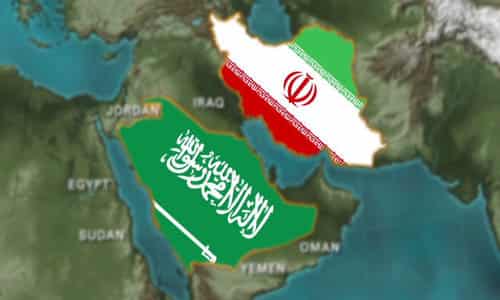
Barack Obama last week visited Saudi Arabia, an unusual nation with which the United States has had a relationship that can be accurately characterized as both strategic and strange -- and one that is now severely strained. To understand how we got to this juncture requires at least a smattering of modern history.
It's polite to say that Ibn Saud, in the first third of the 20th century, united most of the tribes living on the Arabian Peninsula. It's more accurate to say he defeated those tribes, conquering their lands, along with a source of enormous future wealth that lay under some of them.
Ibn Saud allied with the British against the Ottoman Empire whose sultan, based in Istanbul, also had been proclaimed caliph -- ruler of all the world's Muslims. That would have undercut the legitimacy of the House of Saud had a deal not been struck with the Wahhabis, until then a tiny, fundamentalist sect. The Wahhabis blessed the Saudis and granted them governing authority. In exchange, they would be well-funded and their reading of Islam would become the state religion.
In 1932, Ibn Saud gave his dominions a name: The Kingdom of Saudi Arabia. After World War II, a time when the sun was setting on the British Empire, the Saudis turned to the United States. The oil the Saudis had appropriated would now be extracted and sold to those in the West who had developed productive uses for it. In exchange, the United States would serve as Saudi Arabia's defender and protector.
For a few decades, this arrangement worked reasonably well. Then, in 1979, two pivotal events occurred. The first was the overthrow of the Shah of Iran, an uprising that, under the leadership of Ayatollah Ruhollah Khomeini, became an Islamic revolution. That meant that the first modern state committed to waging global jihad was majority Shia and Persian -- a shock and a humiliation to many in the Sunni and Arab worlds.
Then, in November of that year, around the same time as students loyal to the ayatollah were taking over the U.S. Embassy in Tehran, the Grand Mosque in Mecca was seized by what might be called ultra-Wahhabis. Putting down this rebellion was a bloody affair. But because of a Saudi information blockade, most of the world heard only vague and often incorrect details.
The full story would be told in 2007 by Yaroslav Trofimov in his indispensable book, "The Siege of Mecca." In the aftermath of the attacks of Sept. 11, 2001, he recognized the episode as "the first large-scale operation by an international jihadi movement in modern times."
In response to the 1979 upheavals, the Saudis might have been expected to oppose if not suppress fundamentalists eager to fight holy wars. Instead, they attempted to demonstrate their jihadi bona fides by installing Wahhabi clerics in mosques around the world, establishing madrassa that prepared young people to kill and die to defend or spread the "true" Islam, and funding mujahedeen in Afghanistan.
From these seeds would grow al Qaeda, and the fruits of al Qaeda -- the Islamic State among them. Such jihadis despise the Saudis and other Muslims who, they believe, are shirking their duty to smite infidels, apostates and heretics.
At least some Saudis were later to recognize their error. Mr. Trofimov quotes Prince Khaled al Faisal saying in 2004 that while those who seized the Grand Mosque were eliminated, "We have overlooked the ideology that was behind the crime. We've let it spread in the country, ignoring it as if it did not exist." Nevertheless, Saudi-appointed clerics continue to this day to preach hate and incite violence.
As for Iran's rulers, they have two large axes to grind with the Saudis. One traces back to the 7th century when a dispute arose within the newly created Muslim community over who was to succeed the Prophet Muhammad. Since then, the theological schism has only widened. The Shia mullahs of Iran believe no Sunnis should be custodians of the holy cities of Mecca and Medina -- least of all the descendants of a warrior tribe who drink and gamble in Europe while insisting that royal blood flows through their veins.
A less ancient Iranian grievance: Most of Arabia's oil lies in the Eastern Province where the majority of the population is Shia. These Arabians are hardly "Saudis," having been conquered by them in 1913 and suffering discrimination and persecution at their hands ever since. In January, Nimr al-Nimr, a Shia cleric from the Eastern Province, who had been critical of the Saudi government, was executed.
President Obama's policy response to this complicated and fraught reality: He recently told a reporter that Saudis and Iranians need to "share the neighborhood." It's tempting to call that the "Mr. Rogers Doctrine" and imagine what was said about it within the palaces of Riyadh -- and those of Tehran. Also worth pondering: the message that phrase sends to the neighborhood's minorities -- the Christians now under genocidal assault, the Kurds, the Druze and, of course, the Israelis.
The Saudis have never been America's friends in the sense of having common values or mutual affection. But they have been America's allies in the sense of having common enemies and some common -- and vital -- interests. Now the Saudis face what they see as an existential threat from Iranian theocrats who proudly proclaim their abhorrence of America.
Yet, the American president is enriching those Iranian theocrats, strengthening them and making concession after concession without demanding reciprocity. It's reasonable to guess that the Saudis are feeling puzzled and perhaps betrayed. If so, they are not alone.
Originally Posted At The Washington Times - Reposted With Permission