Russia Expands Influence In Iran After Soleimani Killing
 By Emil Avdaliani/algemeiner.com March 17, 2020
Share this article:

As the emotional tide following the January killing of Iran's Quds Force commander Qassem Soleimani ebbs, we have a clearer perspective on what the event meant and whether it was as significant as many analysts and politicians believed.
Though many focused (understandably) on the US's evolving policies regarding the Middle East in general and Iran in particular, Russia's stance was less discussed. Those analyses that touched on Moscow focused more on its immediate reaction to the Soleimani crisis than on analyzing its Iran policy over the long term.
First, it is important to understand Iran's role in Russia's strategic calculus. Iran is crucial for Moscow, as its location at times renders it the most important player in the Middle East. This fits the rationale of the Russian political elite.
Its political thinkers of the 1990s contended that Iran should be a pillar of Russian influence in the Middle East. The so-called Eurasianists, who believe Russia is a mixture of Europe and Asia, say that if Moscow is to limit Western power in the Middle East, it needs Tehran.
For modern Russia, as happened during both the Romanov era and the time of the Soviet Union, it is essential to keep Tehran at least neutral. A hostile Iran would mean diminution of Russian maneuverability in the Middle East.
The countries share a similar understanding of several geopolitical developments in the region. Both loathe any Western military encroachment in the South Caucasus, Central Asia, or the wider Middle East.
Russia and Iran both consider Western interference in their respective zones of influence (the former Soviet space and Syria-Mesopotamia, respectively) as undermining their historical imperatives and rights.
But for Russia, Iran plays a larger geopolitical role. As Moscow's relations with the West generally and the US specifically have worsened over the past several years, the model of multi-polarity in world affairs has become popular in Russia.
This trend of geopolitical thinking presumes the development of several clusters of geopolitical gravitation across Eurasia and elsewhere: China, Russia, India, the EU, and the US.
This thinking is not new: it comes from the 1990s, when Russia was economically and militarily weakened, and its only path to improving its position was to undermine the US-led order by developing deeper cooperation with China and other big Eurasian states.
The Shanghai Cooperation Organization and the BRICS organizations were the result of this kind of multi-polar thinking.
Iran is missing here, but for Russia it plays a practical role: it shifts American attention away from other areas in Eurasia. Iran, unlike other states such as China and India, can do this militarily.
Iranian strategists are clever enough to avoid direct military clashes with US forces (Iran's entire strategy since the 1979 revolution rests upon this presumption) -- but Iran can move its forces into Syria and Lebanon, deeply influence Yemen and Iraq, pose a limited but by no means insignificant military problem in the Persian Gulf, and even stir up trouble in Afghanistan by supporting the Taliban or other groups.
This fits into Moscow's policy of global multi-polarity in which there is a first echelon of states to which Russia belongs and a second consisting of Iran and other regional players that are able to complicate the US's position in the Middle East.
Thus on a strategic level we are likely to see a further aligning of Iran's and Russia's Middle East policies -- and we can now factor in the killing of Soleimani and Tehran's decision to pull out of the 2015 nuclear agreement (and many months before, the American decision to leave the agreement unilaterally).
For decades, Iran's only real near-ally among the world players was Russia. Now that US-Iran relations have deteriorated so sharply, Tehran will have to rely on Russia even more.
The China card will be played as well, as was seen in late 2019 with the hosting of military naval exercises with the Chinese and Russians in the Persian Gulf. However, cooperation with China that is deep enough to change its complicated foreign policy stance will not be easy.
China is not yet willing to snub the US by ignoring its sanctions and engaging Iran economically. This means only Russia can serve as a diplomatic lifeline for Tehran to limit Western pressure.
Not everything is rosy in the relationship. Iran's greater dependence on Russia's economic and diplomatic support gives Moscow enormous leverage over Tehran. This is particularly relevant in the wake of the Soleimani killing.
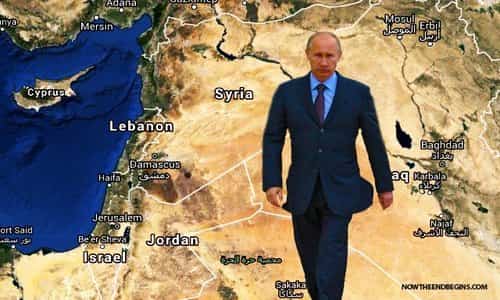
Since 2015, when Russia entered the Syrian conflict, there were reports in both the Russian and the Persian media on concerns in Moscow over Iranian troops gaining influence in Syria at the expense of Russian strategic interests.
The death of the architect of Iran's success in Syria could give Russia a justification to limit Iranian influence in the country and increase Damascus's dependence on Moscow.
There is also the nuclear issue. While one might expect Russia to support Iranian ambitions, the Russian political leadership is not convinced that it would be geopolitically advantageous if Iran possessed a nuclear weapon.
The Russians, like the Americans, are wary of Iran's technological backwardness and poor security, which could compromise the safety of nuclear weapons. Moreover, as there is much evidence of Iran's deep strategic cooperation with military and semi-military groupings across the Middle East, Russians fear the dissemination of technologies to uncontrollable groups.
This could worsen the security situation in the Muslim world and have a spillover effect on the restless Muslim regions of the north Caucasus.
What seems more realistic is that a growing Iranian dependence on Russia will open up purely economic opportunities for Moscow. There are likely to be deeper negotiations on the possible sale of Russian military hardware to Iran.
More significant could be Iran's closer cooperation with the Russia-led Eurasian Economic Union (EEU). The Iranian leadership has been toying with the idea of establishing a free trade agreement with the EEU, but the process has dragged on.
That could change now that there are opportunities for Russia to use Iran's relative weakness to link its 80 million person market to the EEU.
The killing of Soleimani opens up new opportunities for Russia: possible tactical gains in Syria and major economic possibilities through deeper cooperation between a Moscow-led EEU and Iran.
Originally republished at The Algemeiner - reposted with permission.