When Christian Leaders Fall - How Should We Respond?
 By PNW Staff January 08, 2026
Share this article:
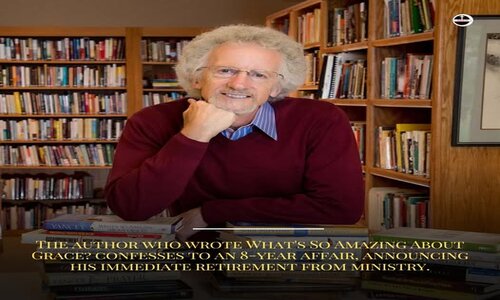
For decades, Philip Yancey was one of the most trusted voices in American Christianity. His books on grace, doubt, suffering, and faith in a broken world sold more than 15 million copies and found their way into churches, small groups, hospitals, prisons, and living rooms across the globe. Yancey had a rare gift: he could speak honestly to believers wrestling with pain without surrendering truth, and he could speak to skeptics without sounding defensive or hollow.
For many, What's So Amazing About Grace? was not just a book--it was a lifeline.
That is what makes his recent admission so devastating.
In a statement to Christianity Today, Yancey confessed to an eight-year extramarital affair, calling it a "personal devastation" and acknowledging that his actions contradicted everything he taught about marriage, faith, and obedience. He described remorse, repentance, and a dependence on God's mercy, while announcing his retirement from public ministry to focus on rebuilding his 55-year marriage. His wife Janet, speaking honestly about trauma and devastation, asked for prayer while clinging to grace.
The news landed like a punch to the gut--not only because of who Yancey is, but because of what he represented.
So now the hard questions begin.
What do we do when Christian leaders fall?
Do we discredit everything they wrote?
Do we excuse the sin because of their influence?
Do we rush to forgiveness without truth--or to judgment without grace?
And perhaps most uncomfortable of all: What does this reveal about us?
The Danger of Thinking "It Could Never Be Me"
One of the clearest lessons in moments like this is also the one we resist most: no one is immune to sin.
Scripture does not hide this truth. David was a man after God's own heart--and an adulterer. Peter preached boldly--and denied Christ three times. Paul called himself the chief of sinners even after decades of ministry. The Bible's honesty about human frailty is not accidental; it is a warning.
The danger is not merely sin--it is confidence. The quiet belief that longevity, knowledge, success, or public respect somehow insulates us from temptation. When Christians begin to believe their theology protects them more than vigilance, they are already drifting.
Yancey's confession should not lead us to smug distance--"How could he?"--but to sober reflection: Where am I unguarded? Where have I mistaken reputation for righteousness?
Temptation rarely arrives loudly. It creeps in through isolation, secrecy, fatigue, unchallenged patterns, and the belief that consequences will never reach us.
Does Failure Erase Truth?
Another painful question follows quickly: Does Yancey's sin invalidate his work?
Critics--especially non-believers--will call Christians hypocrites, pointing to moments like this as evidence that faith is fraudulent. But that misunderstands both sin and truth.
Truth does not become false because the messenger fails to live it perfectly. If that were the standard, Christianity would have no teachers left--and no Scriptures worth reading. The power of Yancey's writing was never that he embodied grace flawlessly, but that grace itself is real, necessary, and undeserved.
In fact, his fall tragically underscores the very message he spent a lifetime explaining: we need grace because we fail--even after years of faith.
That does not excuse sin. Grace is not permission. Repentance is not public relations. Trust, especially in leadership, must be rebuilt slowly and carefully, and sometimes not restored at all. Stepping away from ministry is not punishment--it is wisdom.
But we must be careful not to confuse moral failure with doctrinal falsehood. The gospel is not weakened because its messengers are broken; it exists because they are.
What Repentance Actually Requires
Still, grace does not mean the absence of consequences. The Christian response is not blind defense nor public stoning--it is truth, accountability, and humility.
Real repentance is costly. It means exposure instead of secrecy. It means relinquishing platforms, not protecting them. It means rebuilding trust privately rather than performing remorse publicly. Yancey's decision to retire from public ministry, rather than demand instant restoration, matters.
And it raises a necessary question for the wider church: Do we create environments where repentance is possible--or only where image is protected?
Too often, Christian culture rewards productivity over holiness and influence over integrity. Leaders are applauded for output, not guarded for health. That is a systemic problem, not just an individual one.
What We Can Learn--If We're Willing
This moment forces the church to slow down and reflect.
We must learn to:
Take temptation seriously, regardless of age or status
Build real accountability, not performative transparency
Separate the truth of the gospel from the failures of its messengers
Respond to sin with both clarity and compassion
Resist the urge to defend "our side" instead of honoring God
And perhaps most importantly, we must remember that Christianity does not claim Christians are better people--it claims they are forgiven ones in need of daily grace.
Non-believers may call this hypocrisy. Scripture calls it reality.
The tragedy of Philip Yancey's fall is real. The pain to his family is real. The damage to trust is real. But so is repentance. So is mercy. And so is the warning to every believer who thinks they stand too firmly to fall.
If we listen carefully, this moment can still teach us something holy--about humility, vigilance, and the grace that meets us not when we succeed, but when we finally tell the truth.