From Church Pews To Courtrooms: How Christians Are Being Labeled Extremists
 By PNW Staff March 16, 2026
Share this article:
Not long ago, millions of Americans grew up with a routine that today might sound quaint--Sunday morning church, Sunday evening service, and a midweek Bible study. For many families in the 1980s and 1990s, this rhythm of worship was not unusual. It was simply part of life.
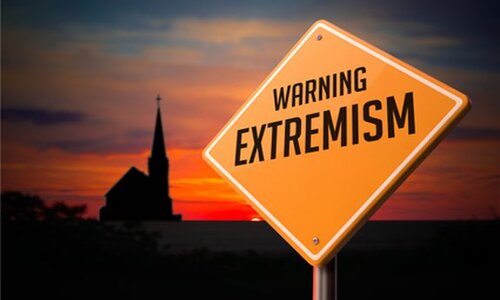
But in parts of the Western world today, the same behavior is increasingly being viewed through a very different lens. In a growing number of legal battles--from Europe to the United States--Christian parents, foster families, and even churchgoers are finding themselves treated not as ordinary citizens exercising religious freedom, but as potential extremists.
The case of Daniel and Bianca Samson in Sweden is perhaps one of the most disturbing examples.
When Church Attendance Becomes "Extremism"
In 2022, Swedish authorities removed the Samson family's two daughters after an argument common in many households. The couple refused to allow their young daughter to wear makeup or have a smartphone. Upset, the girl reported alleged abuse at school--an accusation she later retracted. Prosecutors investigated and found no evidence of abuse.
One might assume the case would end there. It did not.
Instead, Swedish social services kept the girls in foster care and began labeling the parents "religious extremists." The evidence cited? The family attended church three times a week and maintained conservative Christian rules in their home.
Nearly four years later, the daughters remain separated from their parents, placed in different foster homes and allowed to see their family only once a month under supervision. The parents have been cleared of abuse and even completed state-mandated parenting training, yet the state still refuses to reunite the family.
In legal filings, the government explicitly pointed to church attendance and faith-based parenting as signs of "religious extremism."
For millions of Christians worldwide, the implication is chilling: practicing your faith seriously can now be interpreted by the state as a threat.
A Growing Pattern
The Samson case may sound extreme, but it is far from isolated.
For years, Christian foster parents and adoptive families have faced legal barriers if they refuse to affirm gender-transition treatments for children placed in their care. In several jurisdictions, couples have been denied the ability to foster or adopt because they hold traditional Christian views about gender and sexuality.
In states such as New York and Oregon, Christian agencies and foster parents have gone to court after being told they must endorse gender ideology or lose their licenses. Some have won partial victories, but only after years of legal battles that drained resources and placed families under intense scrutiny.
In another case that sparked controversy in the United States, a judge in a custody dispute ruled that a child could not attend a Calvary Chapel church with one parent because the judge labeled the church a "cult" due to its strong biblical teachings about gender, marriage and Jesus being the only path to God.
Think about that precedent for a moment.
A court deciding which church a child may attend--based not on abuse or harm, but on theological disagreement.
If such rulings become normalized, the implications for religious freedom are enormous.
Discrimination in the Workplace and Universities
Beyond custody and adoption battles, Christians have increasingly found themselves in legal conflicts simply for expressing their beliefs.
In the United Kingdom, several cases in recent years have highlighted this tension. One involved a Christian teacher who was disciplined after raising concerns about gender ideology being taught in schools. Another case involved a Christian employee dismissed after expressing traditional views about marriage on social media.
In both cases, courts ultimately ruled aspects of the disciplinary actions were discriminatory, affirming that Christian beliefs deserve legal protection in the public square.
Universities have also become battlegrounds. Christian student groups across Europe and North America have faced derecognition or disciplinary action for requiring leaders to affirm basic Christian doctrines. Some institutions have argued that such requirements violate nondiscrimination policies--even though ideological groups routinely require members to affirm shared beliefs.
In other words, political or ideological conformity is acceptable--unless that ideology is Christianity.
Why Christians Are Being Labeled Extremists
Why is this happening?
Part of the answer lies in the dramatic cultural shift occurring across much of the Western world. Secular progressivism increasingly treats traditional religious belief not merely as outdated, but as inherently harmful.
From this perspective, doctrines about sexuality, gender, and moral authority are viewed as forms of oppression. Parents who teach them are seen not as exercising their rights, but as potentially harming their children.
In this framework, the word "extremism" becomes a convenient label.
But historically, extremism referred to groups advocating violence or the overthrow of democratic institutions. Applying the same term to parents who attend church or limit their child's smartphone use stretches the definition beyond recognition.
A Warning for the Future
The Samson family's ordeal raises a profound question for Western democracies:
Who ultimately decides how children are raised--their parents, or the state?
For centuries, the principle of parental authority guided societies across Europe and North America. Governments intervened only in cases of clear abuse or neglect.
But if attending church regularly or teaching biblical values can be interpreted as extremism, that boundary begins to erode.
And once the state assumes the authority to override parents based on ideological disagreement, there is no obvious stopping point.
Today the target may be conservative Christians. Tomorrow it could be any group whose beliefs fall outside prevailing political norms.
Faith Under Pressure
Ironically, many of the practices now labeled "extreme" were once pillars of Western culture. Weekly worship, moral instruction at home, and parental authority over children were not fringe behaviors--they were the foundation of community life.
If those practices are now considered suspicious, it reveals less about Christians than about the cultural transformation occurring around them.
The question facing the West is not merely legal or political. It is civilizational.
Will societies that once championed religious freedom continue to protect it--even when faith contradicts modern ideology?
Or will they quietly redefine devotion as extremism?
For families like the Samsons, the answer to that question is no longer theoretical. It is painfully real.